The best TED Talks for better meetings & more fun at work

The best TED Talks for better meetings & more fun at work

Quite often people ask me about my favourite TED talks for all kinds of situations. Today: how to improve your meetings at work & make work more fun!

David Grady: How to Save the World (Or At Least Yourself) From Bad Meetings

Off course the talk of David Grady cannot be missed in this list. In his funny, 6 minute TED talk he explains us the “Mindless Accept Syndrome”. He is saving you from wasting away in another boring meeting you don’t belong in.

https://youtu.be/F6Qo8IDsVNg


Jason Fried: Why work doesn’t happen at work

Great talk about how to be more productive at work. In this talk, Jason sheds light on the many distractions we face at work and how the office isn’t suited for creative pursuits that require large periods of uninterrupted time.

http://www.ted.com/talks/jason_fried_why_work_doesn_t_happen_at_work?language=en


Shawn Achor: The happy secret to better work

This longtime Harvard psychologist gave a pep talk in which he argues that simply thinking positively and practicing gratitude daily can measurably boost your overall productivity. This is not just a theory; he has scientific data to prove it J.

https://youtu.be/fLJsdqxnZb0


Nigel Marsh: How to make work-life balance work

In this talk Nigel talks about his experience with achieving work-life balance. He also lays out an ideal day balanced between family time, personal time and productivity – and offers amazing inspiration to make it happen.

http://www.ted.com/talks/nigel_marsh_how_to_make_work_life_balance_work?language=en


Arianna Huffington: How to succeed? Get more sleep

The famous online media guru, Arianna Huffington gave this short and funny talk about the link between sleep and success. She touches upon the irrational race to sleep less in the tech world and how changing that can make us happier, more productive and more successful. Gave me personally some interesting insights.

http://www.ted.com/talks/arianna_huffington_how_to_succeed_get_more_sleep.html


Tony Robbins – Why We Do What We Do

One of the most famous motivational speakers in the world, Tony Robbins gave a TED talk a few years ago, in which he explains why he’s not interested in motivating people at all, but rather helping them understand why they do what they do and the “invisible forces” behind their actions. Haven’t seen someone with so much energy on the TED stage.

http://www.ted.com/talks/tony_robbins_asks_why_we_do_what_we_do?language=en


Paolo Cardini: Forget Multitasking, Try Monotasking
Is multitasking really a time-saver or a total waste of time? Professor and famous product designer Paolo Cardini gave a three minute, humoristic TED talk about this.

https://youtu.be/0YNeyBANrTI


Nilofer Merchant: Got a meeting? Take a walk

Am doing this also more often, when I need to make calls or have meetings with clients or partners. Research has shown the devastating effects of sitting the entire day at the office. Nilofer is giving some practical advice.

https://www.ted.com/talks/nilofer_merchant_got_a_meeting_take_a_walk

“Please cancel modest out of your vocabulary”

“Please cancel modest out of your vocabulary”

Forget Silicon Valley, Amsterdam was yesterday the ‘tech Mecca’ of the world with the opening of ‘Startup Fest’. Apple’s CEO told the audience at the Beurs van Berlage that he “feels a vibrancy, an excitement, a sort of optimism here in Europe”. An optimism that has its clear effects on the Dutch economy according to the Dutch Minister of Economic Affairs, Henk Kamp; “42% of the jobs in the Netherlands are with companies that are younger than 5 years”. The impressive line up of speakers was on the one hand enthusiastic about the European developments in the startup atmosphere, but on the other hand also very critical about the current state of it.


It’s time to act, now!


Google’s former CEO Eric Schmidt told the audience that Google is hiring thousands of young Europeans, as there are currently no jobs for them at European start-ups. This has, according to Schmidt, to do with the European rules and regulations of setting up and growing a company, the low funding of technical universities & start-ups and too much focus on discouraging laws. Apple’s CEO Cook even went a step further, proclaiming “coding should be a second world language, making it a obligatory course at schools”. Although the VP of the European Commission promised that the EU is “going to take down walls and create one European digital market”, all other speakers agreed that Europe requires ‘Silicon Valley style collaboration’ and investment in universities on a short term.


It all starts with frustration


With founders of Uber and Airbnb on stage, the audience also got a wonderful insight in the start-up stories of two exponentially growing, disruptive sharing economy start-ups. Travis Kalanick of Uber told how frustration of not finding a cab in Paris, made him and his co-founder build Uber. With their mission of “making transportation as reliable as running water”, the Uber app was build with an amazing mathematical backend. “We’re not just an app, we are the best predictors of moving crowds in the world”. His colleague from Airbnb, Nathan Blecharczyk, promoted his platform as being very sustainable, as Airbnb’s users consume “78% less energy and 48% less water than their counterparts in hotels”. By “democratizing travel”, the start-up earned only in Europe in 2015 already 3 billion dollars with 2 million offered condo’s.


Underperforming unicorns


Besides inspirational stories from leading startup founders, several interesting learning’s for upcoming startups were given as well. Something really important, as “the startup machine is faltering” at the moment. Investments in startups have decreased by 30% in the past 6 months, mainly due to bad performing ‘unicorns’ (startups with a valuation over 1 BLN). A couple lessons from the speakers:

  • Find the minimal product to sell to a single customer in a new geography and build from there” – Pieter van der Does, CEO & Founder Adyen
  • Keep the product simple but build the company to scale, multi-lingual & multi-cultural by default. Think about scale from the start on every aspect” – Gillian Tans, COO & Co-founder Booking.com
  • Start simple. Test the waters to see how much interest there is” – Steven Schuurman, CEO Elastic
  • Dream bigger! Ideas need to be scalable by default. The world is big, let’s embrace it! If you make a better product then people will swap to it” – Eric Schmidt, CEO Alphabet, formerly Google
  • Find your inner geek! Find something broken! Have a champions mind-set and make magic! Give people back some of their time, bring calmness and joy. Be analytical & creative, merge the left brain with the right one. Sometimes conventional wisdom is correct. But it’s hard to know what is reality and what is perception” -Travis Kalanick, CEO & Co-founder Uber


What is next?


Several predictions of breakthroughs and challenges in the upcoming years were made by all speakers. Tim Cook told that Apple will focus much more on health in the upcoming years with the Apple Watch being the centre of all developments. “Health is a big issue and ripe for simplicity and a new view”, pointing at the importance of more health / biofeedback apps. Apps will furthermore, according to him, also be “the future of TV”.

Google’s main business model will always be advertising, according to Eric Schmidt. In the upcoming years the company will focus on machine learning, as “computer vision outperforms human vision”. Google will launch more augmented reality & voice control tools and focus more on “eyes, ears and voice”.


Curator and Head of TED, Chris Anderson, told me once “don’t invite celebrities on your stage, but create them there”. Something I fully agree with. The extreme excitement of the audience, listening to all these high level speakers quickly turned into a Twitterbash of people like Tim Cook, as most of them were disappointed with all their shiny and standard corporate stories and the absence of critical questions. Catching up with a lot of old friends and meeting several great new ones made the day, together with some interesting insight from the speakers, a not to be missed opportunity. All keynotes can be watched here.


To conclude, some nice quotes from the presentations:


  • If you want to prosper for 10 years, plant trees. If you want to prosper for 100 years, invest in people” -Tim Cook
  • “The 1st i-phone showed up in 17th C painting by Rotterdam artist De Hooch” – Neelie Kroes
  • Don’t worry about cannibalizing yourself, drive forward with passion – then you disrupt” – Eric Schmidt
  • Don’t get full of yourself. Don’t smoke your own exhaust” – Eric Schmidt
  • “We all win because we collaborate. That’s what’s driving real innovation” – Eric Schmidt
  • Creativity is intelligence having fun” – Einstein
  • I never lose. I either win or learn” – Nelson Mandela
  • The ones who follows the crowd will usually go no further then the crowd” – Einstein
  • Fear is the disease. Hustle the antidote” – Travis Kalanick


To disrupt or be disrupted: what comes next after next?

To disrupt or be disrupted: what comes next after next?

A report on the Singularity University Germany summit.

A couple years ago, supercomputers were so extremely expensive, that only a few organizations were able to use them. Thomas Watson expected as president of IBM in 1943 that there would “only be a world market for 5 computers”. Today, the Rasberry Pi has the same memory as a supercomputer from 10 years ago and costs less than a cup of coffee. In China drones can transport human beings, newly announced phones this year will have 3D sensors and in 2020, sequencing a human genome will cost as much money as flushing a toilet. It was not a surprise that the World Economic Forum, where I just joined as Global Shaper, declared the ‘Fourth industrial revolution’, pointing towards the cyber physical systems. The current speed of technological developments is impressive; due to projects like Google Loon and the Facebook Drone project, by 2020 it is expected that an additional 3-5 billion people on earth will have access to the internet, with all associated consequences. Consumers enjoy the benefits of the exponential amount of new technologies, tools and platforms, but society is clearly not ready for it. The global infrastructure is not ready at all.


“The best way to predict your future, is to create it yourselves”

Consumers gain more and more power due to the sharply increasing amount of devices and technological possibilities. Internet of things devices are rapidly being developed and even faster being adopted. The prediction of the amount of IOT devices in 2020 has already been modified from 50 to 500 billion units. 3D printing has also moved from being a ‘nerd thing’ to the average household. Nike, currently producing 500 million shoes every year, expects that in 5 years consumers will 3D print their shoes at home. At Local Motors stores in the USA, consumers can print their own cars, Ardusat let consumers build their own satellite and tools like Mindwave are enabling brain scans for less than 100$. It’s wise to sometimes reflect if all technological developments are actually necessary; do a washing machine and thermostat need to talk with each other? And why should a fridge tell you if your milk is out of date, if you can smell it yourselves?


It’s time to act

At the Singularity University Germany Summit, I got uncomfortable excited by both hearing all these incredible new exponentially accelerating technologies and humanity’s greatest challenges at the moment.

At no other time in human history, has there have ever been more opportunity in business, entrepreneurship and governance to solve humanity’s biggest problems. And at no other time in human history, have needed this more”. We are living in the most peaceful time in history, according to UNICEF, but still 1.2 billion people don’t have access to energy and hunger is a daily reality for almost a billion, contrasting the 2.1 billion obese. Planet earth has lost 52% of it’s biodiversity since 1970 and almost 93% of the great barrier reef has been bleached. “We’re all on this planet together. We better grow up and act like it!” According to Bono is his TED talk.

One of the fields, where technology can have a significant positive impact, is the area of self-driving cars. Every year, 1.2 million people are killed in car accidents, where 40% was caused by alcohol consumption. The cost of accidents has already surpassed the costs of gasoline and the most accurate predictions of ‘lost time’ due to travelling by car last year, is 50 billion hours. A recent milestone was reached in The Netherlands, where a unmanned bus drove over public roads. Companies like Apple are expected to deliver their first driverless car for the consumer market in 2019, but still a lot of regulatory debates should be held in order to make this happen.


“Technology is a resource liberating force”

The technical developments are not always praised. The rising debate about ‘robots taking over human jobs’ is growing, as more industries are exchanging their human workforce for robots and computers. In West-European countries, 47% of the jobs is expected to be automated in the upcoming two decades, in countries like China and Taiwan even 77%, according to researchers at Oxford. But, “The last 144 years demonstrates that when a machine replaces a human the result, paradoxically is faster growth and in time, rising employment”, according to Deloitte. The fact that the top 10 wanted jobs right now, didn’t exist 5 years ago is also supporting this. What to do with all the people, losing their jobs? Several governments are already experimenting with ‘free money for everyone’, as journalist Rutger Bregman nicely pointed out in his TED talk.


Artificial intelligence is taking the capacities of robots even a step further. According to Tesla founder Elon Musk, we should be “super awful with AI”, as it is “more dangerous than nukes”. Intelligence has become a utility and has for example already spawned out robots, beating the best ‘Go’ players. This technology is definitely expanding the range of possibility, but is raising questions if a new set of ethics should be developed. How much control should we relinquish to driverless cars or cyber guardians? Are we not building the real version of ‘The Terminator’?


If you’re not a software company, you will die

Experts at the SU Summit all agreed on the fact that “software is eating the world”. Everything will be in control of software, so if you’re not a software company, you will die. Or as David Rose mentioned it in his book; “every company designed for success in the 20th century is doomed to failure in the 21st century”. Cases of companies failing to adept to the rapid changing business environment vs. the ones who perfectly do, are abundant; from Hyatt vs Airbnb to Kodak vs. Instagram. However, there are also numerous cases of companies who demonstrated their perfect adaptation, like Apple, GE etc.

Accepting the fact that the smartest people in the world don’t work for you and also not for a competitor is causing several ‘exponential organizations’ to start working with ‘crowdsourcing’. Organizations like Lego, P&G Harley Davison and many more have already demonstrated the incremental opportunities with this new type of open source problem solving.


What is next? “The best way to predict your future is to create it!”


Evenement trends in 2016

Evenement trends in 2016

Het afgelopen jaar mocht ik 38 events organiseren, variërend van kleine bijeenkomsten van 50 personen tot grote congressen van wel 900 personen, verspreid over Europa. Trends verwacht je normaal gesproken in de mode en op financiële markten, maar wist je dat er ook op evenementengebied verschillende interessante ontwikkelingen zijn? Trends waar een slimme organisator in 2016 mooi op inspeelt. Graag licht ik 4 trends nader toe:


1) Focus op de bezoeker

Op verschillende manieren is het afgelopen jaar al duidelijk geworden dat evenementen nog meer rekening gaan houden met de wensen van de bezoeker. Variërend van oplaadmuren voor mobiele apparaten tot volledige user experiences; steeds meer evenementen zetten ‘guest experience designers’ in om de bezoeker een zo ultiem mogelijke ervaring te geven. Iets wat in 2016 nog veel verder zal toenemen.


Een doorbraak wordt verwacht met het ‘matchmaking 2.0’. Hieronder worden verschillende netwerktools verstaan, die bezoekers in staat stellen om op een productieve wijze met elkaar in contact te komen. Netwerken blijft een van de top 3 redenen waarom mensen evenementen bezoeken. Organisatoren zullen steeds meer inspelen op de vraag naar tools waarmee bezoekers mogelijke leads of interessante connecties kunnen zoeken.


Netwerkapps vervangen al steeds meer het papier, zoals programmaboekjes. Verwacht wordt dat deze trend komend jaar sterk doorzet en het grootste gedeelte van de evenementen volledig digitaal gaat…van inschrijving tot ‘aftercare’.


Hoewel het momenteel nog vrijwel onmogelijk is om een evenement volledig ‘groen’ neer te zetten, wordt wel duidelijk dat veel organisatoren steeds meer hun best doen om dit te bewerkstelligen. Niet alleen met bovengenoemde apps die papier besparen, maar ook met bijv. digitale goodybags (die de organisator en sponsor veel beter in staat stellen te meten wie, wat, waarvoor gebruikt) en ‘eerlijke catering’, oftewel biologisch / duurzaam verantwoord eten.


Bezoekers worden daarnaast steeds meer betrokken in de ontwikkeling van het event zelf; ook wel ‘crowdshaping’ genoemd. Niet alleen door zaken als ‘stem op je favoriete spreker’, maar het gaat nog veel verder. Bezoekers krijgen steeds meer écht invloed op de content van een event. Dit komt onder andere doordat steeds meer bedrijven een event gebruiken als belangrijkste onderdeel in de communicatie strategie, met een focus op (mogelijke) klanten.


2) Nieuwe technologieën

Bedrijven als Facebook, Google en Samsung investeren momenteel miljarden euro’s in zaken als ‘virtual reality’ en ‘augmented reality’. Hoewel sommige technologie nog niet voor de massa beschikbaar en/of gebruiksvriendelijk genoeg is, zie je wel al leuke toepassingen binnen evenementen. Een paar mooie voorbeelden zijn bijvoorbeeld de ‘Google Cardboards’ bij TEDxAmsterdam en de ‘Cliffjumpers’ bij een Red Bull event.


Ook op het gebied van ‘internet of things’ zijn verschillende interessante ontwikkelingen gaande, zoals ‘beacons’, ontwikkeld door Apple. Laatst sprak ik een bevriende collega die het bekende SXSW festival organiseert in Austin. Zij verwerken beacons in de badges van bezoekers, wat de organisatie een real time overzicht geeft van waar bezoekers zich bevinden. Als het in een bepaalde ruimte bijvoorbeeld bovengemiddeld druk is, kan daar direct extra personeel naartoe worden gestuurd. Beacons worden ook ingezet voor bezoekers zelf, door precies aan te geven waar ze zijn en op ‘points of interest’ additionele informatie / content te geven.


Niet alleen beacons, maar ook andere ‘wearables’ (een nieuwe generatie mobiele applicaties die op het lichaam gedragen worden), zoals smartwatches, slimme naambadges etc. worden steeds slimmer ingezet door eventorganisatoren. Zo kunnen wearables gasten aan elkaar linken op basis van algoritmen en verschaffen ze (gepersonaliseerde) content, zodat een gebruiker de telefoon niet meer uit zijn zak hoeft te halen.


3) Meekijken 2.0

Om te voorkomen dat bezoekers worden afgeleid door hun mobiele telefoon of tablet, als ze op zoek gaan naar aanvullende content bij een spreker, gebruiken steeds meer eventorganisatoren de zogenaamde ‘second screen technology’. Deze technologie zorgt ervoor dat bezoekers aanvullende content krijgen, zoals notities, hyperlinks, video’s, maar ook stemmen en slides, zonder dat zij afgeleid worden van het verhaal. Een paar mooie video’s staan hier.


Helaas kan het wel eens voorkomen dat iemand, om wat voor reden dan ook, een evenement niet kan bezoeken. Simpelweg vanwege een te volle agenda of omdat de kaarten zijn uitverkocht. Veel evenementen bieden een livestream aan, waardoor het live (en meestal gratis) op internet te volgen is. Er zijn echter steeds meer tools, die daar nog een ‘user generated content’ laag over heen leggen; ‘crowdstreaming’. Apps zoals Ubideo en Periscope zorgen ervoor dat bezoekers, zelf kunnen livestreamen en dat ‘meeluisteraars’ hier direct op kunnen reageren.


4) Event communicatie

Bij de organisatie van een event is een sterke communicatiestrategie absolute noodzaak. Niet alleen om een duidelijk onderscheid te maken met andere events, maar met name om de verkoop van entreekaarten te stimuleren. Veel evenementen hebben nog een basale communicatiestrategie die vaak niet aanlsuit op het (volgens onderzoeken) belangrijkste verkoopkanaal, namelijk mond-op-mond.


Naast de gangbare media, zoals Facebook, Linkedin en Twitter, worden kanalen als Instagram en Snapchat daarin steeds belangrijker. De afgelopen twee jaar is het aantal gebruikers van Instagram verdubbeld en heeft Snapchat een speciale functie toegevoegd (‘Live Stories’), waarmee een eigen, gecureerde stroom aan ‘user generated content’ kan worden gemaakt. Early-adopters hebben al met veel succes gebruik gemaakt van deze dienst.


Met een groot aantal events gepland in 2016, kijk ik heel erg uit naar alle ontwikkelingen in het komende jaar. Ik houd jullie op de hoogte!

Foto: TEDxAmsterdam 2016

How TED will reinvent your corporate conferences

How TED will reinvent your corporate conferences

Is it possible to consistently run ‘cool corporate conferences with massive impact?’ We think so. By drawing from our vast experience in organizing and speaking at numerous TED conferences, we believe it is now possible to seriously improve any corporate conference.

The TED phenomena

A majority of conferences and events is still focused on trying to sell its tickets to participants, or cajole luke-warm potential participants to simply join. TED Conferences, on the other hand, have a luxury problem by maintaining long waiting lists for its events. What started as a small gathering in 1984, has grown into a multi-media organization with an annual budget of 50$ million.

While the TED organization itself is a non-profit, we notice that many corporate executives are currently trying to copy the almost magical factors, which drive the acceleration of the TED phenomena. TED is currently changing its focus from solely being a platform of inspiration towards one of activation as well. Today, we’re sharing 8 bright ideas to help activating the TED magic within your next corporate conference.

1) Learning 3.0

Within the field of adult education, social learning has grown into one of the most successful ways of teaching employees new ways of thinking and learning. By enriching learning materials with stories and (video-) content, instead of solely focusing on lists, rules and even more lists, the degree of adaptation increases significantly. As the founder of TED, Chris Anderson, already nicely said that “a spreadable package is of utmost importance when spreading ideas.”

2) Extraordinary things are often achieved by ordinary people

Many books and blogs have been written about particular factors, making executives and top entrepreneurs as successful as they are; fresh juice and a run in the early morning, meditation during lunch and goal setting for the next day before dinner. The majority of the TED speakers are ordinary speakers, focusing on the ‘reason why’ they are executing their work, not ‘how.’ Forget titles and shiny stories, major breakthroughs are caused by unexpected individuals.

3) Disruptiveness & Collaborating

Sitting still, waiting for luck to pass by hasn’t made a lot of people successful and rich. The typical TED speaker is disruptive, embracing constraints, collaborative, looking for new ways of working and innovative channels of creativity and triying to simplify key issues.
According to TED Global director Bruno Guissani, “Radical openness is the organizing principle of everything that we do at TED.” The 1+1=3 idea has already caused several interesting collaborations to flourish and new initiatives to be executed.

4) The velvet rope policy

People love to have what they cannot get. TED and a handful TEDx conferences work with a ‘by invitation only policy’, only allowing a selected few into the conference hall. This policy has caused a huge flush of applications and free publicity on loads of off- and online channels. The exclusive approach has clearly contributed to this success and has also already been successfully used by commercial parties, like Pinterest, Groupon and Vault74.

5) Fall in love with your audience, not with your company/product

As a speaker, show how the audience will be better off once you have left the stage. The highlight of any TED conference is neither the speaker, nor the idea, but how the condition of the audience will be improved afterwards.

6) Interaction is overrated

TED Talks are a monologue, not followed by a discussion immediately afterwards. Only after the event, once the different TED talks have been posted on the internet for all to see, the discussion about the content of the talk is started. It allows both speakers and attendees to fully concentrate on the message and doesn’t distract with potential interruptions.

7) People are attracted to knowledge

Within the communication industry, ‘storytelling’ is a very hot topic as part of content strategies. Storytelling avoids showcasing the corporate logo or commercial message, but feeds the receivers with interesting and useful knowledge about a particular topic. The impact on receivers of these content messages have been widely acknowledged on both retention and attention levels.

8) Brevity is the soul of wit

Academic research has proven that “cognitive backlog,” the maximum span of attention to listen to a story continuously, is 20 minutes. TED talks have a maximum length of 18 minutes and a majority of the talks is even shorter; 12 6 or even 3 minutes are most common. By applying laser-like focus and simplicity (the ‘KISS’ principle), TED speakers minimize the risk of losing the audience attention.

Your opportunity to make waves

Corporate meetings can move from endless hours of boredom to peak inspiration, motivation and performance by simply implementing a couple of the ideas which are mentioned before. When starting to implement these TED strategies within your own corporate boundaries, keep in mind to always “Start with Why” (Simon Sinek) and “Dare to Disagree” (Margaret Heffernan) with your fellow board members. It involves a lot of pieces, but the ‘Puzzle of Motivation’ (Dan Pink) can be the missing piece of the success puzzle, when rethinking how to run your next business meeting. After all, why settle for sticking your toe in the water, when you can make waves instead?

About the authors

Paul Rulkens is an expert in achieving business and personal success in the easiest, fastest and most elegant way possible. He is an award-winning speaker, international author and trusted advisor in the field of high performance. Watch his latest TED talk here, or visit his website at www.agrippaci.com.

Jan Scheele started his first company at the age of 13 and has helped over 150 multinationals, governments, hospitals, political parties and SMEs, accelerating online with their communication strategies. He has organized 20+ large TEDx events in Amsterdam, Baghdad, Eutropolis, Maastricht and for organizations like CERN, United Nations, the Dutch Police Force and the Ministry of Defence. 

Picture: TEDxMaastricht

The impact of the ‘X-factor’

The impact of the ‘X-factor’

The Mount Everest, prisons and a boat on the Amazon. All have been amazing hosts for one of the 14000 TEDx events that have happened since the establishment of the brand in 2009. Locations and speakers usually impress our partners, but a frequently asked question is always concerning the impact of the events. What is happening the day after with the giant pill of inspiration we gave to our visitors?


Several TEDxMaastricht speakers have used the red dot perfectly as a jumping board for further growth in their personal and corporate live, resulting in amazing outcomes. Mosquito-hunter Bart Knols not only got international acknowledgements in the press, but also a funding from the Gates Foundation to start implementing his ideas in Africa. Maastricht University Professor Mark Post made his world-famous lab-grown hamburger already 30000 times cheaper and change-maker Sheila Oroschin keeps on rocking with her project ‘The Masters’, pulling handicapped children out of mental institutions and giving them jobs and a bright future. Hasmik Matevosyan caused a paradigm shift in fashion with her talk and developed a new design system and business model for fashion brands, helping them to produce clothing much more sustainable. Anna Verhulst has inspired thousands with her impressive, personal talk about obesity, her struggle and ways how to deal with it. Finally, Rutger Bregman’s talk about a ‘base income’ has been watched over 120.000 times and inspired dozens of policy makers and politicians to start several experiments on local and national level.


Not just a day of inspiration, but facilitating activation and causing mind shifts at all attendees. TEDx is not just a ‘day out’ for the hungry intellectuals, but has developed into a movement of energized, engaged individuals who are seeking a deeper understanding of the world and wanting to turn that understanding into a better future for us all. This starts with the invitation procedure, where a broad mix of enthusiasts from all levels and parts of society are hand picked from the applications. Speakers are selected not on their function or past performances, but the expected mind shift caused by and uniqueness of their story. This careful approach has not just delivered great speakers, but also unforeseen outcomes. Companies have been found by visitors who’ve randomly met each other at TEDxMaastricht and several other projects and communities have been grown with a bulk of inspiration from the events.


Where the ‘E’ of TED usually implicated ‘Entertainment’, it seems anno 2015 it’s going more into the direction of ‘Education’, focusing more on (young) students and their hunger for new, unconditional ways of simplified, authentic storytelling. The TED Ed program has developed into an impressive online classroom platform with loads of great talks, created by knowledge institutions. Furthermore, the amount of TEDxYouth events has grown significantly. These TEDx events, organized by and for young children have always been one of my favorite parts of the TEDx concept. In Maastricht we’ve collaborated with the highly energetic students of the United World College to setup a TEDx especially for students ranging from 8-18yo. Malaria is being explained with ‘swinging cucumbers’, Indian and African dances are performed by young children and an Afghani student is giving a workshop about what Star Wars can learn us about peace. It are these events, always giving me the idea that a young generation is rocking the boat.


The most memorable moment in my TEDx ‘career’ has been the first TEDxBaghdad. At the start of the event, the Prime Minister of Iraq came on stage and told the audience that this was the most amazing concept he had seen in the past years, connecting the people of his nation with each other. As cherry on the cake, dozens of projects, companies and NGO’s have been found after team members, partners and visitors met each other during the events, ranging from construction to peace.
The rollercoaster keeps on moving; it are not only cities and schools who are hosting TEDx events nowadays. In the past years I was very excited, helping out with the organization of TEDx events at the Dutch Ministry of Defence, CERN in Geneva and the United Nations in New York. All institutions who’ve hosted these events and turned them into an excellent way of facilitating internal discussions about the future of leadership, communities and CSR.
It seems like there is simply no end to all this fun. Everyday I’m amazed again by all the beautiful outcomes of TEDx events, organized worldwide. TEDx events held in Cuba, soccer stadia, with an astronaut speaking live from space, in ‘Holy Land’ with a team from both Palestina and Israel … looking to the numbers and ideas for new events, this ‘startup’ which started as an experiment has developed into a global tribe with an open end.

As I’m frequently asked to give corporate events the ‘X-Factor’, my next blog will be about the lessons learnt for event organizers.

Picture: TEDxAmsterdam

How to become a TED talk hero

How to become a TED talk hero

You have been invited to give a TED talk or want to give a TED-like presentation to surprise your audience. Now what?

A single pebble thrown in the ocean will change the shoreline: TED talks can catalyze ideas, accelerate learning and move large amounts of people.

ExciTED as you are, you may soon realize that what has made you successful at regular talks, will simply fall falt at TED. Much has been written about common sense ideas to design and deliver an excellent TED talk. So what else is there to say?

Our experience includes organizing dozens of TEDx events, coaching hundreds of TEDx speakers and delivering several TEDx talks ourselves. What we have found is that there are 5 heroic rules, which can make the difference between sticking your ‘TED’ toe in the water and really making waves. Each of these 5 rules can move your talk from merely being good to absolutely heroic.

Rule 1: Fall in love with with your audience.
You are passionate about your idea. That’s why you are on stage. Passion, however, can act like a magnet: it can attract or repel. Therefore, always make sure to align with the needs of your audience. Make clear how the audience will be better off after you have left the stage. Shift your focus from ‘Here I am’ to ‘There you are.’ Don’t fall in love with your idea. Fall in love with your audience instead.

Rule 2: Open with a power snack.
We know that a powerful opening is essential to the success of the speech. Too many people use the suger donut approach to try to reach the heart of the audience. A sugar donut gives you a short energy burst. After that, sluggishness kicks in and the speech limps to the finish line. We we have found is that a superb nutritious opening covers four elements:
• Inform what your talk is all about (I’m here to talk about…)
• Excite about how they will be better off after the talk (After my talk, you will be able to…)
• Set the expectations about what they can do with the information (You can apply this to achieve…)
• Involve the audience to participate (for example with a rhetorical question.)

©Harry Bliss/New Yorker Collection 2012

Rule 3: Only show what your audience needs to know.
If your dentist tells you she can remove your wisdom tooth in 18 minutes, or in 30 seconds: which option would you prefer? The lesson here is that you can either plan a good TED talk using the 18 minutes allocated time, or you can give an heroic TED talk in the shortest time possible. Therefore, while designing you TED talk, start with your 30 seconds elevator pitch, containing the magic of know-feel-do.
• This is what I want people to know
• This is what I want people to feel
• This is what I want people to do
From here, create a powerful opening, paint stories and pictures which stick in the mind of the audience and close on a high note. Keep in mind that shorter talks tend to attrack more viewers on the web and a more energized audience. In our hyper connected world ‘more’ is no longer the answer to ‘too much.’ Don’t try to impress your audience with your elaborate brilliance, dazzle them with brevity instead.

Rule 4: Unleash your inner Picasso
Yes, yes: we know: Many people see a presentation as a vehicle to cram in as many words and data as possible. This is not for you. Your job is not to give people the opportunity to have a break and go to the the bathroom, your job is to stretch the attention span of a room full of raving fans.
The US Navy gives the best advice on this; Keep It Simple Stupid!
Go naked: the best talks are often the ones without slides. Alternatively use single picture slides. The ‘D’ in TED stands for Design. Surprise your audience with a beautiful set of custom designed slides.
When people remember your talk when walking out the venue, they tend to spread the message amongst their followers. In the end, it is not what matters on stage, its the conversation afterwards which counts.

Rule 5: Live the entire experience
Planning the content makes up 50% of a good talk. The other 50% is the delivery. It always saddens us to see an amazing story clouded by a hapless stage performance.
Being nervous on stage is normal. Even for a TED talk hero. However, you will do vastly better with a couple of easy steps:
• Glue your feet to the ground. Most speakers tend to walk back and forth, like a caged polar bear. This is not only distracting, it also shows nervousness.
• Focus on your audience. Constantly try to make eye contact. Move your eyes across the audience with a ‘W’ or ‘M’ pattern.
• Breathe! We have seen speakers give the first quarter of their talk with only one deep inhalation. Play with silence. Take regular short breaks to inhale and exhale. When creating silence, you can a hear a pin drop and funnily enough, this increases the attention span of the audience.
• Be vulnerable. It’s ok, even heroes are human. Humans love humanity and they appreciate you showing it.
• Carefully plan how you will enter and exit the stage. Make sure you enter giving the audience high expectations. Make you sure you exit presenting the audience an opportunity to give their appreciation back to you.

Speaking at TED is an opportunity to become a hero to advance your ideas. These 5 TED talk rules will help you to set yourself up for TED success. And that is all that matters: in the end, a TED Talk hero’s life is about success, not perfection.

paul rulkensPaul Rulkens is an expert in achieving business and personal success in the easiest, fastest and most elegant way possible. He is a two times TEDx speaker. Currently, he is responsible for building a High Performance organization at DSM, a global material and life science company. Watch his latest TED talk here.


Closeup Jan Jan Scheele started his first company at the age of 13 and has helped over 150 multinationals, governments, hospitals, political parties and SME’s, accelerating online with their communication strategies. He has organized 20+ large TEDx events in Amsterdam, Baghdad, Eutropolis, Maastricht and for organizations like CERN, United Nations and the Ministry of Defence.

Snakes, overripe mango’s and no WIFI

Snakes, overripe mango’s and no WIFI

While hiking a hill with a windchill of 40 degrees, we’re walking under a three with a rattlesnake, eating termites and play around with a machete. The first day in the jungle, I figured out why I haven’t been to such a place before. But on the same day, laying in a hammock after showering in the wild river, digesting the local grown food I directly felt in love with the very special place in the Panamanian jungle where I would stay for the upcoming days.

I’ve been to a broad range of special places via/for TEDx, varying from Baghdad to the UN HQ and CERN. The location of TEDx: The Jungle, wasn’t just breathtaking. The limitations on the ground and the deeper thought behind the construction and surroundings, made this one of the most remarkable experiences I’ve had the last couple of years.

Just like other TED(x) events, the attendees are always adding the most value to the event. Besides a lot of friends from the TEDx / Sandbox Network and Summit Series, an additional extraordinary variety of people, ranging from investors to developers and CEO’s to property developers joined this marvelous gathering.
Sitting around the firepit, talking about personal hurdles, participating in survival and sustainable farming workshops and just sit back and enjoy the beauty of the pure environment.

The village, Kalu Yala, is an initiative of Jimmy Stice, who setup the entire project together with a couple staff members and a bunch of interns, all with local and sustainable building materials. The TEDx just happened before the start of the construction of a huge jungle community, Jimmy is planning to grow up to 10.000 inhabitants. There website is beautifully showcasing the sketches of and thoughts behind the project.

After a couple days in the jungle, we celebrated NYE on the rooftop of Panama’s most famous club. After that, everybody went either home or to one of the tropical islands. I spend a couple days in paradise, called Bocas del Toro, before flying back to The Netherlands. Completely chilled out, ready for all the great challenges in 2014!

More on this summit:

Article on The Next Web

Report on CNN

This movie was made during the adventure and is perfectly showing in 2 minutes, why you should come next year 🙂

Kalu Yala – Exploring Lifestyle Innovation In The Heart of The Panamanian Jungle from Fundación Gunn Hill Panamá on Vimeo.

Charlie & the golden TEDx entrance ticket

Charlie & the golden TEDx entrance ticket

(Posted also on TEDxMaastricht)

At TEDxMaastricht, we believe that the crowd of our event is almost as important as the speaker line-up. Spreading all those amazing ideas, spawned out on the stage of a TEDx event and taking action out of it, will not happen if the hall is only filled with CEO’s or people from, for example, the consultancy industry. The most interesting and unexpected cross-overs and connectinos are usally the ones made between the most different unexpected people from the most different sectors and layers of society.

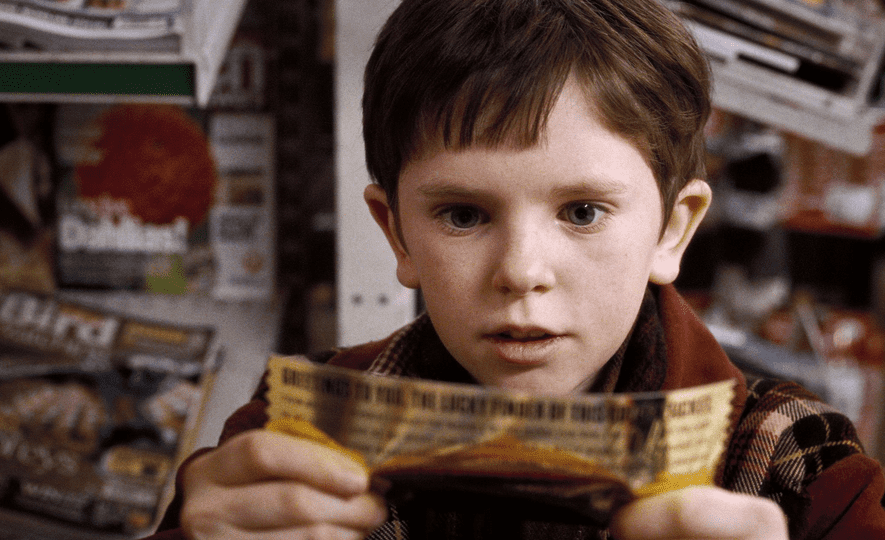
Invitations for TEDxMaastricht are therefore not for sale. We love to curate our audience as much as our speaker list. Team members only get 1 ticket to give away to a friend, in order to prevent making the event one big family dinner and the amount of tickets for partners is limited. Motivation is the key and the most important aspect for us, when inviting our guests. Think about Charly and his trip to the chocolate factory! How boring would it be if he was just able to buy a ticket? A little challenge, thinking about why you should actually be invited, won’t hurt anybody.

At all TEDx events I’ve been at and organized, seeing and feeling the joy of people, being invited to it, is one of the biggest appreciations, an organizer can get. The twinkling in people’s eyes, just like Charly, when entering the chocolate factory, is why we as team, are organizing TEDxMaastricht. When applying online, please keep in mind, that we have to read all motivations and “A little nonsense now and then is relished by the wisest men”(Willy Wonka)

Insha’Allah

Insha’Allah

After the huge success of last year, this year’s TEDxBaghdad ‘The Beginning Begins’ was meant to build further on this perfect way of showcasing the world that Baghdad is so much more than a war zone. Since last year, I’ve had a lot of interaction with my Iraqi Facebook friends and with the extreme joy of last year, last month I decided to bring a visit again to this wonderful spot in Arabia.

The country itself is recovering very fast from the war. Everywhere where you look, building cranes and construction cars are part of the landscape. Compared with last year, the visible security has decreased significantly. Fair enough; the green zone still exists and there are almost as many road blocks and security checks as lampposts. Out of curiosity, I’ve had loads of conversations with local Iraqi’s about the Green Zone itself and what it would mean if whole Baghdad would be one zone, without security checks. It turns out, 5 types of security forces exist, all distrusting each other and operating standalone. Since there is almost no communication between these forces, uniting Baghdad again will take some time.
While most people would think, the democracy has brought confidence by the civilization, most people distrust the government, saying they take money from the people not owning anything and spending it on their own ‘toys’ and prestige projects.

Even in the most secured zones, I still felt the incense security measures. When secretly entering the roof of the one and only hotel in Baghdad (Sadam’s former hotel), snipers discovered us and security quickly removed us. I wasn’t allowed to run in the garden of the hotel, because last year, a scattered bomb was thrown in it, killing 4 people. Together with one of National Geography’s photographers, I took the risk of life and left the Green Zone twice, only with a few body guards. The places we’ve visited were breathtaking, from the ruined statue of Saddam (by American soldiers) to the real inner-city markets and the most important mosque, which was bombed the day after our visit. We were calmed down with the promise that this attach was not because of our visit.

While you won’t hear any complain from the Iraqi’s itself, the intense pressure by militants is extreme. The people, fighting earlier against the American soldiers, went underground and are now fighting against the Iraqi upperclass. High officials, doctors and professors are threatened by dead every day and obligated to leave the country. This already happened at families of several team members, some of them were kidnapped for money and even killed . Because the militans are using silent guns and don’t wear any identifiable badge, it is  very tough to catch them. How does that look like: http://www.youtube.com/watch?v=QneFpct0cJE

The impact of Sadam’s regime has not been completely negative. If people were attending school or university, they were expelled from military service. The huge amount of PhD students, doctors and other professionals is the result and just incredible. While the level of healthcare is the highest in the whole region, the numerous amount of doctors are thwarted in several ways. Not only by the death threats of militants, but also by the people cutting of limbs to prevent new technologies to cure this being developed and the citizens itself. Since healthcare and medicines are free, subsidize by the oil money, citizens require medicines and treatments they often don’t even need, putting unnecessary pressure on the system.

When observing Iraqi people, some people get scared by face impressions and the way of talking. But it’s a long time ago, I’ve met a population which is so extremely friendly, hospitable and helpful. Iraqi’s would slaughter their last sheep, if they would find you starving. While the country itself still needs a lot of time to recover from the war and the old regime, it is so extremely energizing to see these lovely people being so motivated to show the world how beautiful their country and how rich their culture is. As they say, all in gods will, insha’allah!

Mijn wekelijkse

Shot inspiratie

Elke week ontvangen 400+ mensen een shot deep-tech inspiratie. Ook ontvangen? Schrijf je hier rechts gratis in.

Ik spam nooit en gebruik het mailadres
alleen voor deze nieuwsbrief.

Copyright © 2026 Jan Scheele

Ook elke week een shot deeptech inspiratie?

Meld je aan om elk weekend een gratis shot inspiratie te ontvangen in de mailbox.

Ik spam nooit en gebruik het mailadres
alleen voor deze nieuwsbrief.

Paid Search Marketing
Search Engine Optimization
Email Marketing
Conversion Rate Optimization
Social Media Marketing
Google Shopping
Influencer Marketing
Amazon Shopping
Explore all solutions