Web3: what will the internet of the future look like?

Web3: what will the internet of the future look like?

The internet is broken. Filter bubbles, myth traps and the Facebook scandals predominate. What started as a decentralized and democratic system is now controlled by a handful of large tech companies. We have become the product ourselves. We share our data en masse with these companies, with all the negative consequences that entails. In my view, the internet is the most important technological revolution that we as humanity have seen and will have an increasing impact on our daily lives in the coming years. But how can the weather become all of us? Web3 is the next evolution of the Internet, taking care of the many problems it currently plagues.

Data is used against us

Today’s web has turned out to be different from how the inventors envisioned it, according to world wide web founder Tim Berners Lee. The goal of enabling people to find and connect information has certainly been achieved, but the same possibility has also caused major problems. Combined with digital authoritarianism, data and information are being used against us as citizens right now. By directing our opinion, by algorithms that identify innocent people as perpetrators and even incite them to suicide. As Marleen Stikker writes in her book The internet is broken — But we can fix it: “We have lost our digital sovereignty. We are being tapped, directed, followed, lived, and we let that happen ourselves.”

The big technology companies Google, Facebook and Amazon offer amazing services that represent great value to billions of people on our planet. Google’s search engine simply works best when it has all the information. But on the other hand, they have acquired a terrifying power over our daily lives.

The World Health Organization warns of an infodemic. And the authoritative Edelmann, who annually surveys trust in various areas, indicates that public confidence in technology has never been so dramatically low (pdf).

Down with the walled gardens, welcome web3!

It’s time for a fresh new start for the web! With the right motivations, a safer and stronger infrastructure, fairer, more democratic and governed by the collective. Tim Berners Lee coined the term “web3” in 2006, but it was popularized again in 2014 by co-founder of the well-known blockchain Ethereum, Gaven Wood. According to him, Web3 is very simple: “less trust, more truth”.

With the endless stream of scandals surrounding technology companies, but also the increasingly far-reaching digital transition of our society, the call for web3 is growing. In my view it will be much more than a flat version of the internet. Take a look at the insane role the Internet plays in all facets of our lives: from learning to love, from entertainment to confidence, from shopping to even living in the Metaverse. Then I see endless opportunities and possibilities.

The biggest change is the architecture. From a handful of central parties that dominate to a decentralized environment where everyone regains control over their own data and is rewarded fairly for their contribution to the web.

The internet owned by the builders and users, orchestrated with tokens. — Chris Dixon

With the rapid developments in the field of blockchain and cryptocurrencies, we are building a new economic system. Where the motives of owners, participants and developers are fully aligned. Where the merits of services and systems benefit the users, instead of the ‘gatekeepers’, as is now happening.

The future is already here. It’s just not evenly distributed yet. — William Gibson

From web 1.0 to web 3.0

What does web development look like? From 1991–2004 we saw the web 1.0 emerge. Static pages that were ‘read only’, without, for example, options for interaction and logging in.

From 2004 until now, the development of web 2.0 has opened up amazing new possibilities: create, share, collaborate and communicate. Think of social media, online shopping, blogging and vlogging, video calling and gaming.

The transition from web 2.0 to 3.0 is already underway, but is slow and unnoticed by the general public. If you look at existing web3 applications, they often have the same look and feel as web 2.0 applications, but the backend is fundamentally different. Decentralization is central to this. Applications and databases are not hosted and managed on a single server, but are built on blockchain technology. For example, the Bitcoin blockchain is currently hosted by over a million computers, not one exchange.

Web 3.0 will redefine the Digital Age. — Gavin Wood

When I look at the infinite limit of new possibilities that web3 offers, I get more excited about it every day. We already see a lot of web3 applications, which more and more people are using. Cryptocurrencies are the best-known use case here, next of course NFTs (part of tokanization). Recently I also wrote about Decentralized Autonomous Organizations (DAOs) and Self Sovereign Identity, which are also very important parts of web3. Basically they are all decentralized applications. Cryptocurrencies to send and receive money decentrally, NFTs to arrange decentralized ownership, DAOs to organize an organization decentrally and SSI to have an identity decentrally.

Decentralized data pods

We regain control of our own data and personal data. Not a separate account for every website or social medium, but one digital identity. With this you log in to the various sites and platforms and you have control over which data and personal data you want to share.

The Web as I envisaged it, we have not seen it yet. The future is still so much bigger than the past. — Tim Berners-Lee

To immediately show how this can work, web inventor Berners-Lee set up Inrupt for this. This works with personal ‘data pods’, personal vaults with data. A website can then always request access to your data vault, in exchange for certain services. But they cannot extract or resell this data.

Several major websites such as Reddit are already using web3. Users can earn crypto tokens by posting on a web3 section. The number of tokens can also rise or fall, due to the number of up- and downvotes. Twitter is working on project Bluesky, which is to become the web3 version of the social media platform. Founder Jack Dorsey recently tweeted that he doesn’t believe this will democratize the internet.

The key to the Metaverse?

Web3 could also become the key to the real Metaverse, bringing together all of the aforementioned functionalities in one virtual environment where things ranging from social interactions and entertainment to work and shopping come together. As I wrote about this before, this may still sound fairly futuristic to many, but the speed at which web3 and metaverse applications are currently being developed and the amount of money invested in them can already make this a reality in the short term.

Gradually, then suddenly. -Ernest Hemingway

Still a lot of bumps along the way

The road to web3 is still full of bumps. Building web3 applications involves a lot of complexity to make it truly decentralized. The interaction of an application with the decentralized network, all requirements related to management, maintaining privacy, etc. are technically a major challenge.

Governments worldwide are also stumbling about what they should actually do in the field of legislation and regulations regarding decentralized applications. A lot of work is being done on NFTs and DeFi in that area. But a day in blockchain land equals a human life. The developments are going so fast that they are impossible to follow for many people and governments. We are therefore looking closely at what things like DAOs and the Metaverse could look like. Most makers and implementers of legislation and regulations I speak to about this have absolutely no idea what to do with it.

In the meantime, I continue to dream about decentralized countries and the transition of traditional nationalities in online identities and communities. With thoughts about web4 and the day-to-day developments in the web3 field, we are entering a very cool, decentralized time.

Jan Scheele is active in the web3 (blockchain, crypto, NFTs, DeFi) industry since 2013. Besides (former) CEO of a web3 scaleup and founder of an advisory boutique (working for governments, family offices and several multinationals), he is Digital Leader at the World Economic Forum and Board Member at the Blockchain Netherlands Foundation (BCNL). He is writing, consulting, speaking and training regularly about everything web3, all over the world. Furthermore, he is currently finalizing his book about the rise and global impact of blockchain technology.

admin

Jan Scheele werkt dertien jaar op het snijvlak van deep tech, strategie en leiderschap. Als keynote spreker en dagvoorzitter maakt hij technologie tastbaar voor boardrooms, directieteams en grote podia, zonder de complexiteit te versimpelen of te verbergen achter buzzwords.

Zijn achtergrond ligt in het bouwen. Als CEO van een technologie scale-up, oprichter van meerdere techbedrijven en organisator van meer dan vijftig TED-events wereldwijd zag hij van dichtbij hoe technologische keuzes doorwerken in strategie, governance en cultuur. Vanuit zijn betrokkenheid bij het World Economic Forum en de BCNL Foundation kijkt hij daarbij niet alleen naar wat technisch mogelijk is, maar ook naar wat bestuurlijk houdbaar en maatschappelijk wenselijk is.

Hij publiceerde vijf boeken, waarvan twee Amazon-bestsellers, en schrijft wekelijks over AI, blockchain en de organisatorische gevolgen van deep tech. Zijn blogs bereikten inmiddels meer dan twee miljoen lezers.

What are decentralized autonomous organizations (DAOs) and what can you do with them?

What are decentralized autonomous organizations (DAOs) and what can you do with them?

Recently, we have rapidly started to work in a more decentralized way. No longer constantly at work, but much more or even completely at the home workplace. Major technology companies such as Facebook and Twitter have already indicated that they are fully committed to a ‘decentralized workforce’. The Dutch government has also started to regulate various activities in an increasingly decentralized manner. Decentralized autonomous organizations (DAOs) go much further. But what exactly are those? In this article all information about this new phenomenon.

As humans, we have been organizing ourselves in ever-changing, newer forms ever since we walked the Earth. In recent years, the accelerated digital transition has pushed more and more organizations into the cloud. Research shows that more than three quarters of internet users are now in an online community, and another survey shows that almost 80% of respondents indicate that the main community they are a member of operates online. We are even seeing all kinds of new organizational forms emerging, such as the sharing economy and content networks, that reward people for their contribution to a network.

The current dilemma: differences in wealth and profit maximization

Thus, over the past hundreds of years, corporations have played an important role in building our human civilization, which has never been so rich. But at the same time, they are now creating major problems that have a strong negative impact on our society. Such as large differences in wealth and the very negative social consequences that result from profit maximization.

The new organizational forms are also still centrally coordinated. This makes the differences between the participants within such an organization even greater. We see the large differences in pay between employees and drivers of Uber, but also, for example, that the top 1.4% of musicians on Spotify collect 90% of the royalties.

Where in the beginning companies provided structure in our society, this now seems to cause a divisiveness in various areas. This, combined with the rapidly increasing loneliness and ‘the great resignation’, has ensured that DAOs have become popular at a rapid pace. DAOs address many shortcomings of current companies, such as the maximum focus on profit, the barriers to entry and the large difference in remuneration between shareholders, management and employees.

What are decentralized autonomous organizations (DAOs)?

DAOs are basically programmed organizations on the blockchain. The rules are laid down in so-called ‘smart contracts’. Where Bitcoin makes (financial) intermediaries superfluous when sending and receiving money, DAO’s management makes it superfluous. Everything is done transparently and automatically, by the users themselves, together. There is therefore no hierarchy, but also no bureaucracy.

Often DAOs are set up by a worldwide community around a certain mission, who are jointly responsible for the programmed objectives. As a result, the whole works in a completely decentralized and democratic way. It provides an innovative, new way of organizing organizations on the web.

“Corporations organized the Industrial age, DAO’s will organize the Internet Age” — Aaron Wright

This way of working creates a solution for the ‘principal-agent theory’, where friction can arise between the principal (read: management) and the agent (read: employee), because the agent has no interest in performing the task as the principal intended him. Consider, for example, a commercial hospital, where management prefers to see as many treatments as possible, but doctors prefer to take the time to properly help a patient.

How do you encourage organizational members to manage and maintain the DAO?

DAOs often use their own digital token (or coin). This token gives the holders voting rights, and can also be obtained as a reward for working for the DAO. The smart contracts can make many of these payments happen automatically.

Suppose we turn Frankwatching into a DAO, and create the FrankCoin. We lay down the rules of participation and the reward system in advance in a ‘smart contract’. As a writer, for example, I can be automatically rewarded with FrankCoins for my blogs, based on the number of readers (I’m in favour!). But we can also reward other aspects, such as writing newsletters and maintaining the site. In addition, we as a community can vote on topics that we would like to see on the site and which we would not.

DAOs started in 2014 with an idea from Vitalik Buterin, who already gave the possibility to build smart contracts and decentralized applications (DApps) with his Ethereum blockchain. Today, there are 190 DAOs worldwide, with a total of more than 1.5 million members and worth billions of dollars. They build nicely on the ideology of Ricardo Semler, who wrote a book about this and about whom VPRO made a good documentary, and Nobel Prize winner Elinor Ostrom, who after decades of research and work experience came up with 8 powerful design principles for how common resources are sustainable and just. can be controlled in a group.

How will DAOs be deployed in 2022?

DAOs can be used for all types of organizations, from charities and freelancers working together to a political party. We now see them mainly arising around investments, fundraising, but also, for example, buying NFTs. For example, the JennyDao, which regulates fractional ownership of NFTs, bought an original track from DJ Steve Aoki. Elon Musk’s brother started the Big Green DAO, a charity focused on food justice, and there are also DAOs that support public services, for example.

Play to Earn (P2E)

The first Dutch DAOs are now also a fact, including IgniteDAO, which builds applications on the Zilliqa blockchain, and The Merit Circle, which responds to the ‘play-to-earn’ economy (P2E), which is rapidly growing. is. Where with traditional games you mainly see the value going to the maker of a game, P2E games reward the players for playing the game and their performance in it. This works like an economy.

In exchange for the time and energy they put into it, sometimes also accompanied by capital (such as an NFT), the DAO rewards them with the token of the game played. The most famous P2E game is now played daily by almost 2 million players. More than half of these players are from the Philippines. According to research, they thus earn more than a nominal salary.

Learn to Earn (L2E)

But don’t just play to earn, learn-to-earn (L2E) is also starting to emerge. In this new educational model, the DAO rewards an individual when they can demonstrate that they have learned something. This, of course, if he can demonstrate that it adds value to the DAO and the members of the DAO also see the value of this. A good example of this is RabbitHole, which provides gamification within a DAO. Users learn a new skill and get tokens for it, and crypto companies get trained users as a result.

But we’re not there yet

It’s really cool to see the rapid developments unfold within the DAO landscape. We’re really moving from the community-led organizations, like Etsy and Github, to community-owned organizations. Starting a DAO yourself is nowadays very easy via a platform such as Aragon or Colony.

But with the speed at which everything happens, several things also go wrong. One of the first DAOs, “TheDao,” which raised $150 million in investments, was hacked due to a code flaw. As a result, $70 million was stolen. Also, $130 million was recently stolen in the BadgerDAO hack. We are working hard on solutions to prevent hacks and to minimize the damage of a possible hack, but there is no watertight solution yet.

Also in the field of regulations, I can hear The Hague sighing again. Thirteen years after its inception, next year there will finally be legislation and regulations (MiCA) surrounding cryptocurrencies such as Bitcoin. But we have already seen so many new developments within blockchain technology, such as DeFi, NFTs, and now DAOs. It’s great that anyone worldwide can participate in a DAO, but what about contractually and fiscally, for example? What if things go wrong, like a hack? Is the system liable or a natural person?

They are big challenges.

Through damage and shame, more and more DAOs are becoming wise, also, for example, in the area of ​​joint decisions. That can take a while if you have a few hundred thousand members. The first major steps have been taken, the first successful DAOs are a fact. Now that it is becoming easier and safer to set up a DAO, I am very curious about the developments in this area in the coming year.

Jan Scheele is active in the web3 (blockchain, crypto, NFTs, DeFi) industry since 2013. Besides (former) CEO of a web3 scaleup and founder of an advisory boutique (working for governments, family offices and several multinationals), he is Digital Leader at the World Economic Forum and Board Member at the Blockchain Netherlands Foundation (BCNL). He is writing, consulting, speaking and training regularly about everything web3, all over the world. Furthermore, he is currently finalizing his book about the rise and global impact of blockchain technology.

admin

Jan Scheele werkt dertien jaar op het snijvlak van deep tech, strategie en leiderschap. Als keynote spreker en dagvoorzitter maakt hij technologie tastbaar voor boardrooms, directieteams en grote podia, zonder de complexiteit te versimpelen of te verbergen achter buzzwords.

Zijn achtergrond ligt in het bouwen. Als CEO van een technologie scale-up, oprichter van meerdere techbedrijven en organisator van meer dan vijftig TED-events wereldwijd zag hij van dichtbij hoe technologische keuzes doorwerken in strategie, governance en cultuur. Vanuit zijn betrokkenheid bij het World Economic Forum en de BCNL Foundation kijkt hij daarbij niet alleen naar wat technisch mogelijk is, maar ook naar wat bestuurlijk houdbaar en maatschappelijk wenselijk is.

Hij publiceerde vijf boeken, waarvan twee Amazon-bestsellers, en schrijft wekelijks over AI, blockchain en de organisatorische gevolgen van deep tech. Zijn blogs bereikten inmiddels meer dan twee miljoen lezers.

Blockchain: the 5 most important developments for 2022

Blockchain: the 5 most important developments for 2022

What a great year it has been for blockchain. And what an amazing year we have ahead of us. Never before have there been so many startups. Never before has so much money from investors gone into technology. And never before have so many organizations worked on implementations. If we leave all the Dogecoin Drama and the hype surrounding the Bitcoin Boom there and focus on the technology itself, I see a lot of cool developments that are currently playing and will play in the coming year. I share my top 5 in this article.

Blockchain, not Bitcoin or blockchain beyond Bitcoin. Many professionals and enthusiasts around the technology try to make the clear distinction with the best-known cryptocurrencies. Away from the current speculative hype around prices. Focus on the development and implementation of the technology itself. Understandable, although I can see that the current madness in the cryptocurrency market is also positive for blockchain. The news is once again full of it and there has never been as much money invested in the technology by investors as in the past year.

Today, 81% of large companies use the technology. And I also see more and more smaller SME companies experimenting with it or even implementing it. Now I often leave enthusiasts disillusioned by saying honestly that they don’t need the technology in the organization at all. You often see that the wrong thinking sequence is used. We want to do something with blockchain and then we look for an internal problem. Instead of: we have an existing challenge and blockchain is a good solution for that. Nevertheless, I see that there are currently a lot of challenges being tackled with technology.

Startup showtime

It’s not just implementations. At the moment it seems like showtime almost every week, with one after another unveiling a new product or service from a startup in the Netherlands. If we look at the Gartner Hypecycle of blockchain, we see that various elements of the technology have already gone through the tough ‘trough of disillusionment’ and are now walking the ‘slope of enlightenment’. As I wrote before, compare it to the development of the Internet and you’ll see that we’re only just getting started. We are at the beginning of a great technological revolution.

In the next decade we will have more progress than in the last 100 years. — Peter Diamandis, founder of Singularity University

First look back

Also last year I was allowed to look at this year in the glass blockchain sphere of Frankwatching. Back then I already saw many companies that were rapidly making these chains transparent. This very recently published report shows that the number of countable implementations has doubled in the past year compared to the year before.

Another trend that has undergone a lot of development beyond expectations is the “government crypto”, the Central Bank Digital Currencies. I will share an outlook for the coming year about this later in this article. I also foresaw many developments in the field of the ‘fintechization’ of our society, which has entered a fast waters worldwide with the unprecedented development of the Decentralized Finance (DeFi, which I wrote about earlier).

1. DeFi continues to amaze

As I wrote in my cryptocurrency trend article for the coming year, ING published that they find DeFI insanely interesting, we see a lot of established financial institutions worldwide already working with it and I see the ‘total value locked’ in the ecosystem in the coming doubling from $200 billion to $400 billion year on year.

A recent report from investment bank JP Morgan shows that it’s not just about experimenting anymore. $9 billion in profits alone are made each year by individuals and organizations that are “striking”: locking/saving crypto that earns you interest.

Building bridges

I foresee a number of developments in the coming year. Now that big finance, the big banks, are working hard with DeFi, you see many startups building bridges with their products. Bridges between traditional finance and new crypto world. Synthetix is ​​the best-known example of this, Nexis does this nicely with insurance and many other startups will also launch their product on the market next year.

The virtual gas price is going through the roof

The high fees that many people in developing countries pay for sending money are often the marketing argument of enthusiasts to promote cryptocurrencies. Where easily 10–20% is charged by parties such as Western Union, crypto transactions are often a fraction of this. For example, someone recently paid $0.80 for a $2 billion transaction in Bitcoin.

But with the Ethereum blockchain, on which the majority of blockchain applications run, such as ‘smart contracts’, ‘NFTs’ and DeFi products, this is unfortunately no longer the case. The costs for transactions, the so-called GAS, have increased by more than 300% in 1 year. Developers are therefore looking to other blockchain networks for the development of their applications, where Polkadot is currently doing well, which was set up by the co-founder of — yes — Ethereum.

It is a much discussed topic and with all the new technological developments from existing companies and new startups, I expect that the high costs will largely disappear in the coming year.

Decentralized trading platforms

What will certainly not disappear are the decentralized exchanges, such as Uniswap, Pancakeswap and Sushiswap. Names that put a smile on your face at first sight. But when you see how much money these decentralized exchanges (DEXs, cryptocurrency trading platforms) are currently processing per day, the smile turns to amazement.

Nowadays, more is traded on these types of decentralized trading platforms than with central parties such as Coinbase and Binance. Although it is still fairly complex for many users to use and the US government has indicated that it wants to strictly regulate these platforms, I see an insane growth in trading volume in the coming year. All kinds of new DeFi applications are being developed on these trading platforms, which will only increase the growth of the ecosystem.

Blockchain based games

A final development, which is currently emerging in DeFi and could become very big in the coming year, are blockchain-based games. There are 2 billion gamers worldwide who currently spend $150 billion on this. And $250 billion in two years. The in-game purchases are a big part of this multi-billion dollar market and 62% of gamers and 82% of developers have indicated that they would like to see this on the blockchain.

There is still a lot of work to do in the security shop because of the many major hacks. Recently, $600 million was stolen during the Poly hack and $115 million during the Cream hack. Research shows that 2/3rds of these hacks are due to developer incompetence and almost 1/3rd to code errors.

2. NFT boom or crack?

It seems that if you haven’t made NFT yet as a creative, you don’t belong anymore. My social feeds are full of enthusiasts who mint (make), sell and buy the NFTs. Earlier I wrote about the great possibilities, for both makers and companies. Where with Web1.0 companies made and earned content and the current Web2.0 people create content and companies earn from it, with Web3.0 I see that people not only make content, but also start earning real money from it. NFTs play a key role in this.

In my view, NFTs will really have a major impact on the art, fashion, music and sports worlds. Not only the large companies such as VISA, Disney and Adobe that are working with this, are piling up. There are also more and more possibilities that were not (technically) possible before.

The lazy monkey community

In addition to the flat buying and selling of content and artworks, you also see a new trend emerging: communities. The best example of this is the Bored Ape Yacht Club. All owners of one of the Bored-Apes, which on average sell for a few million each, can become a member. Many owners even buy a Bored Ape to join this community.

Monkey owners make their own monkey their Twitter photo as a sort of status symbol. In addition, they also get a number of benefits with their property: access to a Discord group for other owners, access to virtual merchandise drops, and free additional NFTs. NFTs makes all this (technically) possible and I think this is going to be very big not only next year, but also beyond.

Play to earn blockchain games

In my trend blog about crypto I also wrote about another cool trend within blockchain / NFTs: the ‘play to earn blockchain games’ (P2E). Because who wouldn’t want to make money playing games? For example, Louis Vuitton has launched its own online NFT game and the most famous P2E game, Axie Infinity, has already made $1.6 billion. Players in countries such as the Philippines and Indonesia are now playing these games because they earn more money than regular work.

Also within NFT there are new developments every week. LOOT is really a revolutionary thing in this. The creator of VINE created 8000 ‘LOOTbags’, put them online and all were claimed for free in no time. They have all turned out to be conversation starters. All kinds of communities of fans, artists and creatives are currently looking at future creations. It is inspired by how the famous Marvel spent billions developing all kinds of sci-fi films. Hundreds of writers and artists received money and came up with ideas for the films, where eventually a combination of all ideas was actually produced. LOOT does not want to do this top-down, but directly with the virtual community.

The coming year can’t go wrong in my opinion, with the great drive with which many people continue to develop the NFT ecosystem. A lot of news is still about the insane amounts that are sometimes paid for NFTs, such as $533 million that was supposedly deposited for a CryptoPunk. The great thing about many blockchains is that everything is transparent, so you can also make big data analyzes around the earnings. Then you see that only 2% of NFTs sold are sold for more than $600 and the majority of the large sums end up in the pockets of just 50 artists.

3. Stablecoins on the chain

It is a thorn in the side of lawmakers worldwide: stablecoins like Tether. Earlier I wrote about the importance of this within the global financial and cryptocurrency systems. Due to their rapidly increasing size, according to several governments, they could actually endanger the global financial system.

Credit rating agency Fitch warned this month that the rapid growth of stablecoins could have “destabilizing effects” on short-term credit markets. The global Financial Action Task Force (FATF) recently warned about the huge increase in money laundering. And the Bank for International Settlements wrote in its most recent report that they see no value in it at all.

Tether

While the coins imply bringing stability, the largest stablecoin, Tether, has been in the news on a continuous basis lately. Many people assume that stablecoins are ‘pegged’: 1–1 backed by another asset. So for every Tether in circulation, there would be a dollar stored somewhere. This coin is now worth more than $70 billion. And after great international pressure, it turned out that the company behind Tether had a very strange mix of assets to cover all this money on its balance sheet.

As a result, the company had to pay a fine to the American government and the same government has now urgently developed a framework to severely restrict stablecoins, such as Tether. Trade exchanges such as Bitcoinmeester have already taken the coin offline. It’s not just about Tether, though. There are dozens of stablecoins in circulation and the big wait is still for the stablecoin that shook up many governments: Diem, initiated by Facebook.

In addition to expressing great concerns, European, Chinese and American governments have now rapidly developed legislation that will come into effect next year. President Biden has already indicated that they are in the same category as banks. And the head of the US central bank, Jerome Powell, has already indicated that he does not want to ban them, but that they are strictly regulated. It is important to filter the cowboys out of the industry and actually gain broad acceptance by larger institutions. In a recent Deloitte survey, 83% of executives said they see current fiat money being replaced by such coins.

4. Governments are working overtime

Normally, governments always lag behind technological developments, the so-called pacing problem. In the blockchain field, however, I see a few important developments emerging from governments in the coming year.

MICA Regulations

First, the important MICA regulation is likely to be extensively tested, discussed, and then implemented in the coming year. An extremely important step in the further professionalization of the sector. And with it the entry of even more organizations.

Self Sovereign Identity

In addition, the EU announced last June that it will further intensify the efforts around ‘Self Sovereign Identity’, about which I wrote earlier. The EU is also making great strides with its own European Blockchain Services Infrastructure. By creating this infrastructure, the European Commission aims to provide a large number of cross-border digital public services. ‘For the benefit of citizens, society and the economy.’

It is the first EU-wide blockchain infrastructure to be created in an effort to make public services more reliable and accessible to European citizens. By making governance more transparent, facilitating compliance with EU regulations and working on data compatibility.

5. Gradually, then suddenly

Bitcoin’s inventor, the still-mysterious Satoshi Nakamoto, is said to be turning in his grave. Several times. The initial idea of ​​the Bitcoin blockchain was to take power away from financial intermediaries (such as banks) and governments and by returning the decentralized nature of blockchain technology to the citizen.

The Chinese government is now using the technology to launch a digital central bank money system, the E-CNY. According to many experts, this gives the Chinese government even more control over its population, by being able to largely control financial transactions in the country. It is only 100 days until the Winter Olympics in the country, where this so-called Central Bank Digital Currency (CBDC) will see the light of day. Meanwhile, the Chinese government has pressured American companies operating in the country, such as McDonald’s, to accept the currency during the games.

The influence of China

Even though there are already countries that use their own CBDC, such as the Bahamas and very recently Nigeria, China seems to be having a major impact on the financial system here. And in the long run, even weaken American power considerably. With its E-CNY infrastructure, it can seriously undermine the current infrastructures, which are dominated by Dollars and American power (such as the SWIFT system).

In the coming year, people are eagerly looking forward to what China will come up with. It will not immediately take over global economic leadership in one year, but as Ernest Hemingway’s beautifully describes in his book The Sun Also Rises: ‘gradually, then suddenly’. Just like the impact of many technologies; slowly, but suddenly extreme and unexpected.

The ‘bank of banks’, the Bank for International Settlements (BIS), recently launched its latest report on the worldwide developments in the field of CBDCs. This shows that 86% of central banks worldwide are looking at CBDC. And 60% are already developing it.

Away with the wallet gardens: power to the people!

Decentralization remains the magic word in many developments. In more and more areas, we see not only the call for the return of certain power to the user/citizen, but also the launch of blockchain solutions that make this possible.

The decentralized storage of big data, no longer in the ‘wallet gardens’ of the ‘big tech companies’.
Putting power and sovereignty back in the hands of makers, owners, small organizations and citizens. What we are now seeing in the major developments around NFTs and DeFi.
Fractional ownership through ‘fantokens’ such as those of Ajax, PSV and Fortuna Sittard and real estate, such as with the Amsterdam Bloqhouse.
It all fits into the next phase of the development of the Internet: Web3.0, built on a decentralized architecture.

Fortune favors the bold

We are looking forward to a very cool blockchain year. I’m really looking forward to all the developments that I don’t see coming at all. It has become clear with all developments that these are often started by the brave, great thinkers. We’ll see if the courage of many of them will be rewarded in the coming year.

Jan Scheele is active in the web3 (blockchain, crypto, NFTs, DeFi) industry since 2013. Besides (former) CEO of a web3 scaleup and founder of an advisory boutique (working for governments, family offices and several multinationals), he is Digital Leader at the World Economic Forum and Board Member at the Blockchain Netherlands Foundation (BCNL). He is writing, consulting, speaking and training regularly about everything web3, all over the world. Furthermore, he is currently finalizing his book about the rise and global impact of blockchain technology.

admin

Jan Scheele werkt dertien jaar op het snijvlak van deep tech, strategie en leiderschap. Als keynote spreker en dagvoorzitter maakt hij technologie tastbaar voor boardrooms, directieteams en grote podia, zonder de complexiteit te versimpelen of te verbergen achter buzzwords.

Zijn achtergrond ligt in het bouwen. Als CEO van een technologie scale-up, oprichter van meerdere techbedrijven en organisator van meer dan vijftig TED-events wereldwijd zag hij van dichtbij hoe technologische keuzes doorwerken in strategie, governance en cultuur. Vanuit zijn betrokkenheid bij het World Economic Forum en de BCNL Foundation kijkt hij daarbij niet alleen naar wat technisch mogelijk is, maar ook naar wat bestuurlijk houdbaar en maatschappelijk wenselijk is.

Hij publiceerde vijf boeken, waarvan twee Amazon-bestsellers, en schrijft wekelijks over AI, blockchain en de organisatorische gevolgen van deep tech. Zijn blogs bereikten inmiddels meer dan twee miljoen lezers.
Cryptocurrency in 2022: The 5 most important developments and trends

Cryptocurrency in 2022: The 5 most important developments and trends

Perhaps the most beautiful year in the history of cryptocurrencies. Exploding stock prices, records of investments in startups, big as the writing of this blog started, I couldn’t choose what I expect to happen in the coming year. I’m going to try it anyway in this 2022 trend blog about cryptocurrencies.

One day in crypto is equivalent to a year in a human life. Even though the technology is still very young; on October 31, it will be only 12 years since Bitcoin was established, the developments are moving at lightning speed, and it is almost impossible to keep up. Earlier I wrote about Decentralized Financing (DeFi), Non-Fungible Tokens (NFTs), Stablecoins, Central Bank Digital Currencies (CBDCs), and the Metaverse. Many gave developments, which are currently taking place in the sector. Meanwhile, the Bitcoin price has risen to an ‘all-time high’; a record high of $62,600, and the US government approved a so-called Bitcoin “ETF” in 2019.

Looking for the moonshot

This Bitcoin price has doubled this year, at the time of writing, and there are also all kinds of altcoins (alternative cryptocurrencies) that have increased in value by percentages such as 15000% and 10000%. The well-known ‘Stock to Flow’ model predicts that the Bitcoin price could even double again to $100,000 around Christmas, which will also have a positive catalytic effect on the altcoins.

The nice thing about this madness is that I suddenly get a lot of old acquaintances on the phone again, who are looking for advice when buying cryptocurrencies and especially; which altcoin I expect to “moon” (crypto terminology for strong rise). Many people seem to have gotten high because of the crazy price increases that many coins have gone through, the stories of acquaintances who have made a lot of money with them, influencers who promote one coin after another as a new moonshot and the endless stream of positive developments in the sector.

Waiting for the black swan

The world is flooded with liquidity by the endless printing of money by governments and the zero percent interest rates. Liquidity, which is partly returning to the cryptocurrency market. We saw in the United States that 7% of the stimulus checks that the government sent out to its citizens were used to buy crypto, and in the Netherlands, 5% of people already had crypto, and 25% are planning to buy it.

In my view, the madness will continue for a while, now that the economy has recovered so quickly after the corona dip and the stock markets are reaching record highs. However, we have to wait for an unexpected ‘black swan event;’ totally unexpected but with great impact.

At the beginning of June, we saw how one tweet from Tesla CEO Elon Musk caused the entire crypto market to collapse.

What did I expect in the past year?

Also, last year I was allowed to make predictions about what trends I expected around cryptocurrencies this year. No pressure for next year’s predictions, but this year has all come true. The large institutional parties have entered with insane amounts, and according to this nice overview, new investments are regularly added. The bull market has started very clearly, with a big dip here and there, but if you zoom out, you see an unprecedented rise in all coins.

Will something be done with the money that all these projects collect and earn from this increase? Certainly! Many large projects are constantly working on major new updates to the platforms, forging new partnerships, and unveiling new technological advances. Bitcoin has published the major ‘Taproot’ update, Ethereum has made a big step forward in its transition with the launch to ‘2.0’, Cardano now comes with an update every month, Binance has just launched a $1 billion fund, and Solana is also hammering hard on the highway.

Unfortunately, we also see the less positive predictions come true; cryptocrime has also taken off. Hacks, scams, pump & dumps, and many other criminal activities are the order of the day and are increasing rapidly. Governments have started to look at their own role at an accelerated pace, with regard to legislation and regulations. Now I very much welcome this, to make the sector mature and ready for the entry of many more (large) investors. Unfortunately, however, several exaggerated and unhelpful responses from governments have actually done damage. More about this in my predictions for the coming year.

1) Bitcoin for the groceries

From a nine-page document, Bitcoin has grown in 12 years into a global ‘reserve asset’ with social impact. In the west, most developments are ‘underground’; the underlying blockchain technology is already used by 81 out of 100 companies but is often not visible to the consumer. In many developing countries, cryptocurrencies have become part of everyday life. If we look at where cryptos are used the most, you will see some interesting countries in the top list; Nigeria, the Philippines, Turkey, and Venezuela. Countries that, not coincidentally, also have problems with their current currency.

The central American country of El Salvador surprised friend and foe by making Bitcoin legal tender. As a result, companies are obliged to accept Bitcoin. I’m still not sure what to think about this step. If you have just converted your income into Bitcoin and an American billionaire has almost halved the price with a tweet, it is inexplicable. But on the other hand, 70% of residents simply don’t have a bank account, often because banks don’t offer it for a variety of reasons.

In addition, a quarter(!) of the national income enters the country via a foreign money transfer, where often high percentages (up to 30% of the amount sent) are charged by parties such as Western Union. More than 70% of residents receive this type of payment, which is on average 50% of residents’ income. Cross-border money transfers via Bitcoin can therefore save $400 million in fees for residents on an annual basis. Money that the population can use hard.

International Monetary Fund

The last word has not yet been said; the International Monetary Fund has put a planned loan to the country ‘on hold,’ and there is also domestic resistance. Even though there are already 2 million ‘Chivo’ wallets in use (on 6.5 million inhabitants), 70% of the residents voted against the introduction in a large survey, and 93% of the companies say they have not yet made a Bitcoin payment.

Ticket to freedom

The precedent has now been set. Countries such as Paraguay and Brazil are now also looking at the possibilities of making Bitcoin a legal tender. In countries such as Afghanistan, it is now called the ‘ticket to freedom.’ And, In the coming year, I expect more countries to use Bitcoin and possibly other currencies as legal tender. In the fight against high cross-border payments, in the fight against inflation, and to reduce the US dollar’s power grab.
Not only as payment but also as an investment. Countries like Bulgaria and Ukraine have already bought billions of euros worth of Bitcoin.

2) Flashes of light

Cryptocurrencies are not only actively used in developing countries; also, in western countries, there are all kinds of applications that are used on a daily basis. In several ways, it has been made possible to thank content creators for their work. Twitter has added the Tips feature to the platform, which allows you to give a Bitcoin tip to your favorite Tweeps. This is now also possible with podcasts, by Podcasting 2.0 from ‘podfather’ Adam Curry.

Both functionalities use the lightning network. This is a so-called ‘second layer solution,’ which is built on the Bitcoin network. It, therefore, offers a powerful response to Bitcoin’s critics that the number of transactions that are possible on the network and the speed thereof, lag behind current payment methods such as credit cards. Where Bitcoin can handle 7 transactions per second and VISA 65,000, Lightning can handle millions.

Just last month alone, the number of Lightning transactions doubled, and the number of users increased by 11164%. This is not only due to the Twitter Tips because it can process very small payments relatively cheaply, it is also widely used in the gaming world for the purchase of small in-game items and in developing countries such as El Salvador for payments. A cool development, because it really has a positive impact in developing countries. In the coming year, I expect the volume of transactions to increase very strongly, with positive effects for Bitcoin itself as well.

3) Art & Capital keep flying

The money that is now going around in the NFT market and Decentralized Financing (DeFi) continues to rise. Not only the smaller ‘retail’ investors but also existing institutions such as ING indicate that they find DeFI an incredibly interesting development. Crypto would make financial institutions, such as banks, completely obsolete. But now we see that many large banks are actually working with it themselves and offering products. The ‘total value locked’ (money that has been invested) in DeFi is now greater than $200 billion, and I see this amount doubling to $400 billion in the coming year.

There are still some really big steps to take to make DeFI mature. Of all hacks in crypto land, 75% take place within DeFi. In addition, the US regulator, the SEC, recently indicated that it will introduce strict regulations for DeFi in the short term. Institutional DeFi will therefore have to wait for a while, the general DeFi world is growing fast in the meantime.

Interest in NFTs also continues to grow. In the past quarter alone, more than $10 billion was traded. That’s not just bored monkeys, the very first source code of the internet, and a spot on the arm of a famous tennis player. More and more larger parties are also entering the NFT market, such as Disney, Electronic Arts, and the WWF. There are also all kinds of new developments, such as ‘play to earn blockchain games.’ Earn money while playing a game; who doesn’t want that? Not entirely unexpectedly, almost 1 million people are already doing this, and the games are shooting out of the ground. Louis Vuitton very recently launched the game ‘Louis: The Game.’

4) The big boys keep coming in

The great thing about blockchain, and especially Bitcoin, is that you can see and analyze all transactions since its inception. This allows parties such as Glassnode and Chainalysis to make the most interesting analyses. From identifying and tracking criminal transactions for secret services to mapping out what accounts hold Bitcoin.

Owners who own more than 1000 Bitcoin, also known as the “whales,” are often followed. Some whales are known to be who they are, but most are unknown. It creates a lot of speculation; are they wealthy individuals or the banks that anonymously buy and trade Bitcoin? There are all kinds of tools that monitor the movements of these ‘whales,’ such as the Twitter account ‘Whale Alert.’ Where Bloomberg wrote that 2% of Bitcoin wallets own 95% of all available Bitcoin, Glassnode shows in an in-depth analysis that this is distributed much better and that this distribution is also increasing.

Due to the reporting obligation that many public companies worldwide have around finances and large investments, large purchases of Bitcoin are often announced worldwide quickly. However, this information is not available from large institutional investors and the so-called ‘family offices’ (management companies of very wealthy families). In a recent event that I organized around the new European crypto legislation MICA, several experts indicated that they also expect that this type of investor will only buy cryptocurrencies on a large scale once this MICA legislation has been implemented.

5) Crackdown the cowboys

This legislation is now being drawn up worldwide at a rapid pace. Many governments realize that they cannot wait for years with legislation and regulations surrounding cryptocurrencies. The US government has woken up and, on the one hand, indicates that it does not want to ban cryptocurrencies but is very concerned about its transactions and stability. Like the European Central Bank, these two power blocs fear that the sudden collapse of the cryptocurrency market could endanger the stability of the global financial system. They refer here to the Bitcoin crash in 2017, where Bitcoin lost 2/3 of its value in a month, and the top 10 altcoins lost 80%.

As I wrote earlier this year, I am and will remain enthusiastic about regulation as long as the balance between regulation and innovation is not skewed. In the Netherlands, we see that too strict legislation, on the one hand driving unicorns out of the country, on the other hand giving Dutch companies a very unfair position vis-à-vis competitors from abroad, who do not have to comply with these strict rules. Governments worldwide are now taking strong action against the trading platform in cryptocurrencies, Binance, about which even the Dutch Central Bank has already publicly warned.

I, therefore, expect many developments worldwide in the field of regulation in the coming year. Stablecoins and DeFi will probably first be looked at closely, in addition to the crypto market in general. The US government already introduced 18 different laws last quarter, and the European Union is now also making major steps with its MiCa legislation, which will apply equally to all countries in the European Union. It is expected to enter into force at the end of next year, early 2023.

It continues to surprise, it continues to be careful

When the iPhone was introduced, nobody knew that we would navigate with Google Maps, edit photos with Instagram, and stream music with Spotify. It is also a surprise every day with cryptocurrencies what new developments are announced. We are working hard on challenges such as the excessive power consumption of certain blockchains, security, stability, and speed. It remains to be careful for investors in cryptocurrencies. TV Program Radar recently showed how easy it is to set up a ‘pump and dump’; a way of significantly manipulating the price, which puts many investors at a disadvantage.

The scam ads with well-known Dutch people such as John de Mol and Humberto Tan have already caused dozens of victims in the Netherlands. Also, ‘fake projects’ that bring in money and then disappear from the face of the earth are still the order of the day. Check this blog I wrote earlier, how you can prevent this.

While I see an insane amount of potential in the possibilities of crypto, in the long run, 95–99% of projects will fall over at some point. We also saw this three years ago; Cryptocurrency projects also remain startups, with all the investment risks that entail. With all the cool developments I foresee in the coming year, my enthusiasm about cryptocurrencies remains insanely bullish!

Jan Scheele is active in the web3 (blockchain, crypto, NFTs, DeFi) industry since 2013. Besides (former) CEO of a web3 scaleup and founder of an advisory boutique (working for governments, family offices and several multinationals), he is Digital Leader at the World Economic Forum and Board Member at the Blockchain Netherlands Foundation (BCNL). He is writing, consulting, speaking and training regularly about everything web3, all over the world. Furthermore, he is currently finalizing his book about the rise and global impact of blockchain technology.

admin

Jan Scheele werkt dertien jaar op het snijvlak van deep tech, strategie en leiderschap. Als keynote spreker en dagvoorzitter maakt hij technologie tastbaar voor boardrooms, directieteams en grote podia, zonder de complexiteit te versimpelen of te verbergen achter buzzwords.

Zijn achtergrond ligt in het bouwen. Als CEO van een technologie scale-up, oprichter van meerdere techbedrijven en organisator van meer dan vijftig TED-events wereldwijd zag hij van dichtbij hoe technologische keuzes doorwerken in strategie, governance en cultuur. Vanuit zijn betrokkenheid bij het World Economic Forum en de BCNL Foundation kijkt hij daarbij niet alleen naar wat technisch mogelijk is, maar ook naar wat bestuurlijk houdbaar en maatschappelijk wenselijk is.

Hij publiceerde vijf boeken, waarvan twee Amazon-bestsellers, en schrijft wekelijks over AI, blockchain en de organisatorische gevolgen van deep tech. Zijn blogs bereikten inmiddels meer dan twee miljoen lezers.

What is the Metaverse? How can Blockchain play a role?

What is the Metaverse? How can Blockchain play a role?

Recently, Mark Zuckerberg shared Facebook’s plans to turn its social media business into a metaverse. And other companies are already developing metaverse-like products, such as Christian Louboutin and Fortnite. What is the metaverse? And how can blockchain technology help shape this? More on that in my newest blog.

Wi-Fi, smartphones, cryptocurrencies and augmented reality, they were all predicted in 1992 by ‘tech nostradamus’ Neal Stephenson in his book Snow Crash. Also known as the “Bible of Silicon Valley”. The book was even the source of inspiration for Google Maps. The metaverse is now starting to gain momentum.

What is the metaverse?

The metaverse is a valid social network. Besides communicating with each other here, you can also build and do things that were not possible in real life. Inspired by Burning Man, Second Life was founded 15 years ago, the first major metaverse.

Millions of people were part of this virtual community, including Barack Obama and a few hundred thousand Dutch people. Companies such as Philips, Nike and ABN AMRO had a virtual branch. Artists such as Direct performed on the virtual island ‘DropZone’ and the Dutch Political Party CDA even took to the virtual street to win souls. People paid with the virtual currency ‘Linden Dollar’ and met in the virtual bar, the predecessors of Bitcoin and Tinder.

The hype passed and the idea of ​​a metaverse was brought to the market in light variants, think of Facebook and Reddit. In the meantime, developments in the field of augmented reality and virtual reality have accelerated. Also through the acquisition of Facebook, Microsoft and Google of various companies in the sector.

Online gaming has undergone an insane growth and development in recent years, where various Second Life elements can also be found. Such as buying and setting up virtual environments and developing an online identity. Billions of dollars a year are now being spent in this in-game economy.

Facebook’s plans

Facebook also wants to transform the company into a metaverse. Now all kinds of companies were already developing metaverse-like products, from metaverse Christian Louboutin fashion shows to metaverse mushroom trips. The creator Epic of the wildly popular game Fortnite recently won $1 billion on its own metaverse vision.

It will be a massively participatory medium of a type that we really haven’t seen yet, with a fair economy in which all creators can participate, make money and be rewarded. — Tim Sweeney, CEO Epic Games

A company like Facebook takes this to a much higher level. This is due to the number of users of the platform, the knowledge of setting up a social medium and AR/VR and of course a large pocket of money to develop it.

This is going to be a really big part of the next chapter for the technology industry, It will be the next generation of the internet — Mark Zuckerberg

Zuckerberg wants to connect more than a billion people in this way. So this goes a bit further than reading a status on Facebook from a friend from another country. And also beyond an augmented reality app, with which you can see in real time what IKEA furniture in your home or make-up on your face might look like.

An environment that you are part of
What really matters is that as a user you feel that you are part of it. As if you are physically in it with other people, in a different place. That’s something most Frankwatching readers have probably never experienced, but many gamers have. Gaming platform Roblox, with over 120 million users, already offers such an environment. It is complete with its own identity, social network, its own rules and enforcement and even a functioning economy.

It’s the newest macro-goal for many of the world’s tech giants — Matthew Ball, Amazon

Facebook has now put 10,000 employees on metaverse projects, Google has already launched many cool projects, as has Amazon with Lumberyard and Sumerian. Apple will most likely launch its own AR glasses soon. With an amazing reach, the company obviously has great potential to set up its own metaverse with all kinds of different functionalities, which fit in nicely with its own products. But just like with Second Life, the strength will come from all organizations that will set up one metaverse together. Instead of all making their own world

A vision that spans many companies; the whole industry. It will be an embodied internet — Mark Zuckerberg

Get rid of the walled gardens
Leaving aside the cool plans of the big technology giants… the metaverse could, in my view, put many wrong developments around the internet back on the right track. The endless stream of disclosures and lawsuits surrounding privacy violations, the data silos that give an almost unassailable advantage in the field of AI, but also the far-reaching influence on many aspects of our lives, provide a fairly negative image of the big technology companies.

Everybody from an individual participant to a major developer should participate on equal terms. Only that way can you get a really enduring free and fair economy that is built on the same foundational principles as our country. If the metaverse is open, each company will still want to own some things. The principle here is every creator owns their original creations and has the right to make the profit from them — Tim Sweeney, CEO Epic Games

Within the developments I see a great role for blockchain technology, in 4 ways:

1. Decentralized organization

No central control by a company such as Facebook or Google, a government or a person, but by all participants collectively. In a decentralized way. Decentralized autonomous organizations (DAOs) are organizations without a central authority, which are governed on the basis of pre-programmed smart contracts. What Bitcoin does to money, a DAO does to organizations.

Within a DAO there are no hierarchies, everything is transparent and people who do work for the DAO are paid in cryptocurrencies.

You can already see this nicely in action at Decentraland, an open-source virtual reality initiative. It calls itself the first truly decentralized world, fully operating as DAO. In this interactive 3D world, anyone can buy a piece of LAND, visit a museum or club and take a gamble in a casino. Companies such as Coca-Cola sell virtual products and recently the first VR music festival was also organised.

2. Self-sovereign identity

Decentralized organizations are also nicely in line with a topic I wrote about in my previous article on Frankwatching: Self-sovereign identity (SSI). As a user, you are completely in control of your own identity and data. An ‘open metaverse’, built with ‘privacy by design’ and SSI, provides a great foundation for a world where the user decides with whom he/she shares his data and in what way.

No more creating an account for every part of the virtual environment, where you are obliged to leave all your identity and name and address details. Only 1 account that you manage yourself, carry with you and of which you only share the necessary.

3. Zero knowledge proofs

Going a step further Zero-knowledge proofs (ZKP), a blockchain solution that allows you to prove to another party that you are real. Or that you share your age or gender, for example, without revealing your identity.

An example is a mortgage at Rabobank or ING, which ZKP uses to verify whether your income is in the range to get a certain mortgage amount. Without disclosing your actual income. This principle can of course be used very widely, in metaverse, for example, if you speak white to a medical specialist and want to share certain data, but you prefer not to identify yourself.

4. Non-fungible tokens

One of the major contributions of blockchain technology to the metaverse is the Non-fungible tokens (NFTs), which I also wrote about before on Frankwatching. The buyer of the digital artwork Beeple, who paid $69 million for this NFT, has now built up an NFT collection of $189 million and wants to use it to set up virtual museums within metaverse.

Adidas held a virtual fashion show at Decentraland, where the designs were auctioned as NFT. Gucci has sold exclusive virtual bags for $4,000 each, more than the regular physical retail price. Rapper Travis Scott has sold 27.7 million tickets as NFT with his in-game Fortnite concert. Pieces of land on Decentraland have recently sold for more than $500,000.

Online environments are going to be very very big. NFT real estate could one day fetch millions of dollars — Frederic Chesnais, voormalig CEO

More and more companies and industries are working on concepts within metaverse environments. I can already see different brands capitalizing on the metaverse trend in all sorts of cool ways by launching products or boosting their branding. Accenture is even taking it a step further with the ‘Nth Floor Project’, building a metaverse for its more than half a million employees worldwide. This way these employees can come together.

Metaverse: Critical Sounds

As with many other technological developments, metaverse is also dismissed as a bubble and doomed. Think of online gaming and Bitcoin. The amounts paid for a virtual Gucci bag or a piece of virtual land are also grist to the mill for critics. In metaverse, everyone should be equal and the big differences that we see in our contemporary society should not exist.

Unfortunately, social networks without central control and monitoring have already shown what they can cause. Parler and Gab are ‘good’ examples of this. The main criticism, however, remains that “big tech” should not be given too much power within the metaverse, as they already control more and more of our daily lives. However, it is the parties that have the reach, the money and the knowledge to set up a metaverse.

A sandbox for nerds and innovators

In the past year we have rapidly started organizing, arranging and experiencing many more things virtually. Not only the vrimibo, entire weddings and funerals were organized online and the fitness industry is trembling with the masses of athletes who have exchanged the gym for online classes. Although the technology still seems far away, developments are moving very fast.

Although it is still mainly a sandbox for nerds and innovators to play in, I can already see a broad, far-reaching metaverse emerging in 2025. I’m looking forward to going to a virtual concert with a good friend from Singapore with a beer in hand. And doing a calisthenics workout with my sister. Until then, I will continue to satisfy my skin hunger in the old, familiar, physical world.

See, the world is full of things more powerful than us. But if you know how to catch a ride, you can go places — Neal Stephenson

Jan Scheele is active in the web3 (blockchain, crypto, NFTs, DeFi) industry since 2013. Besides (former) CEO of a web3 scaleup and founder of an advisory boutique (working for governments, family offices and several multinationals), he is Digital Leader at the World Economic Forum and Board Member at the Blockchain Netherlands Foundation (BCNL). He is writing, consulting, speaking and training regularly about everything web3, all over the world. Furthermore, he is currently finalizing his book about the rise and global impact of blockchain technology.

admin

Jan Scheele werkt dertien jaar op het snijvlak van deep tech, strategie en leiderschap. Als keynote spreker en dagvoorzitter maakt hij technologie tastbaar voor boardrooms, directieteams en grote podia, zonder de complexiteit te versimpelen of te verbergen achter buzzwords.

Zijn achtergrond ligt in het bouwen. Als CEO van een technologie scale-up, oprichter van meerdere techbedrijven en organisator van meer dan vijftig TED-events wereldwijd zag hij van dichtbij hoe technologische keuzes doorwerken in strategie, governance en cultuur. Vanuit zijn betrokkenheid bij het World Economic Forum en de BCNL Foundation kijkt hij daarbij niet alleen naar wat technisch mogelijk is, maar ook naar wat bestuurlijk houdbaar en maatschappelijk wenselijk is.

Hij publiceerde vijf boeken, waarvan twee Amazon-bestsellers, en schrijft wekelijks over AI, blockchain en de organisatorische gevolgen van deep tech. Zijn blogs bereikten inmiddels meer dan twee miljoen lezers.

When will we get our own digital identity? Self-Sovereign Identity is coming!

When will we get our own digital identity? Self-Sovereign Identity is coming!

Having a driver’s license or identity in your wallet is something normal in our Western society. It’s something everyone has as standard, so we hardly think about it. Whether you are rich or poor, young or old. From the moment the parents register a child with the Municipality, the official identity is recorded in the Personal Records Database and you will receive a Citizen Service Number. Will it soon be replaced by a digital identity, or a Self-Sovereign Identity? In this article I will tell you all the ins and outs about this new form of identity.

An official identity is important and necessary in arranging many things in life. From arranging a bank account and insurance, to obtaining a loan or mortgage. And for access to almost all government services and nowadays even buildings. The privacy laws and regulations have only made this more strict. As a result, more and more people are asked to identify themselves.

Lack of formal identity and identity fraud

But an identity is not so self-evident; more than 1 billion people worldwide have no official identity. As a result, they cannot open a bank account, set up a business, vote, receive healthcare or get an official job. One of the United Nations’ Sustainable Development Goals is that all people on our planet should have a formal identity by 2030. It has set up the ID2020 Alliance for this purpose.

But it is not only people who do not have a formal identity who experience major problems in their lives as a result. People with a formal identity in Western countries have problems with their formal identity due to large-scale fraud. In the Netherlands, 1 in 10 people is a victim of identity fraud, worldwide there were as many as there were people living in the Netherlands last year, and another victim is added every two seconds. Last year, the damage to consumers was $56 billion.

One of the most underexposed, but promising areas where blockchain technology will have a tremendous impact, is Self Sovereign Identity (SSI): a digital identity. You are back in control of your own identity. Not only physically, but also digitally. Control how your personal data is shared with other persons and/or parties, so that you only share the necessary data in a transaction or interaction.

One ID to rule them all

Just think in how many places your address details are known because of online shopping. What if you move? What if your password becomes known to hackers due to a data breach? Then you would rather update everything once from your ‘wallet app’ on the phone, than go through all parties one by one.

Storing and monitoring your identity on your own phone is not only much easier to use, but also much safer according to studies. The controlled sharing of your personal data also offers countless invaluable opportunities in terms of analysis, collaboration and predictions. Concrete proposals for this were already made in 1985 by the creator of one of Bitcoin’s predecessors, David Chaum, but it is now really starting to take shape.

Digital identity (SSI) in practice

The best example of the use of blockchain technology within the SSI movement, I continue to find the World Food Program of the United Nations in Jordan. Where 400,000 refugees have been given a digital ID on their mobile phone. By scanning the eye, for example, one can pay in a store without the need for money. Or conjure up your own current medical file with a healthcare provider. Refugees cannot be deprived of money they have received from the UN. And the UN can see perfectly real-time which goods it has to deliver to which stores and the medical file is always up-to-date and never lost again.

The largest democracy in the world, India, already works with a digital ID based on biometric data: Aadhaar. Today, 99% of adult residents have an Aadhaar ID, which is used in all interactions with the government. From paying taxes to enrolling in education. This makes the government a lot more efficient and less sensitive to fraud. The World Bank has already called it the most advanced ID system in the world.

Baby on the blockchain

Many governments are working on a digital identity in the background. From Tanzania, where the first baby has already been registered on the blockchain, to Dubai, which will copy the Indian Aadhaar 1–1. It is one of the fundamental building blocks of European governments for the European Union to focus on in the coming period. A start was made on this in 2014 with the electronic IDentification, Authentication and Trust Services (eIDAS) legislation. It was thoroughly reformed last year after many experiments and experiences from frontrunner Estonia and should really get fleshed out next October.

In our own country, Rabobank has been researching the use of SSI since 2016 and there are great startups like Tykn that offer turnkey SSI solutions. The Dutch Blockchain Coalition and Digicampus have been investigating concrete options for the Dutch government since last year.

DigiD already works well as a central ID solution for governments. So we have to wait for a decentralized SSI, with which you can also authenticate at companies. The corona pandemic has accelerated the urgency of an eID, because of the vaccination passport. All European governments are working individually and jointly on SSI. So we have to wait for the concrete translation, as with the Indian Aadhaar.

Concerns about privacy at SSI

The opponents mainly state their concerns about privacy with a digital identity. Blockchain is known for its immutable nature. While in Europe we know the ‘right to be forgotten’ within the GDPR legislation. Something the EU Blockchain Observatory is currently cracking its brains on. Nevertheless, India is also looking to put Aadhaar on the blockchain, because the system still centrally stores the data. Which of course creates a huge security risk.

In addition, the question arises; do you have to make the ID mandatory when, for example, creating a social media profile, so that you can never respond anonymously again? Fake news, hate speech and rigged elections could disappear like snow in the sun, but one of the most basic fundamental rights; freedom of expression can be seriously compromised.

The many hacks that we see in the news every day are creating more and more pressure to take concrete steps in the SSI field in the short term. The coming year will therefore be an interesting one within the European Union, because of all the concrete plans that will be unfolded. As with new technological developments such as autonomous driving and the CBDCs, the technology is already quite advanced. It is precisely the ethical dilemmas and practical implications that still prevent its introduction. In any case, we are well on our way. And I look forward to all the cool developments in the coming months.

Jan Scheele is active in the web3 (blockchain, crypto, NFTs, DeFi) industry since 2013. Besides (former) CEO of a web3 scaleup and founder of an advisory boutique (working for governments, family offices and several multinationals), he is Digital Leader at the World Economic Forum and Board Member at the Blockchain Netherlands Foundation (BCNL). He is writing, consulting, speaking and training regularly about everything web3, all over the world. Furthermore, he is currently finalizing his book about the rise and global impact of blockchain technology.

admin

Jan Scheele werkt dertien jaar op het snijvlak van deep tech, strategie en leiderschap. Als keynote spreker en dagvoorzitter maakt hij technologie tastbaar voor boardrooms, directieteams en grote podia, zonder de complexiteit te versimpelen of te verbergen achter buzzwords.

Zijn achtergrond ligt in het bouwen. Als CEO van een technologie scale-up, oprichter van meerdere techbedrijven en organisator van meer dan vijftig TED-events wereldwijd zag hij van dichtbij hoe technologische keuzes doorwerken in strategie, governance en cultuur. Vanuit zijn betrokkenheid bij het World Economic Forum en de BCNL Foundation kijkt hij daarbij niet alleen naar wat technisch mogelijk is, maar ook naar wat bestuurlijk houdbaar en maatschappelijk wenselijk is.

Hij publiceerde vijf boeken, waarvan twee Amazon-bestsellers, en schrijft wekelijks over AI, blockchain en de organisatorische gevolgen van deep tech. Zijn blogs bereikten inmiddels meer dan twee miljoen lezers.

NFTs: this is how you make them yourself & 4 bottlenecks for the future

NFTs: this is how you make them yourself & 4 bottlenecks for the future

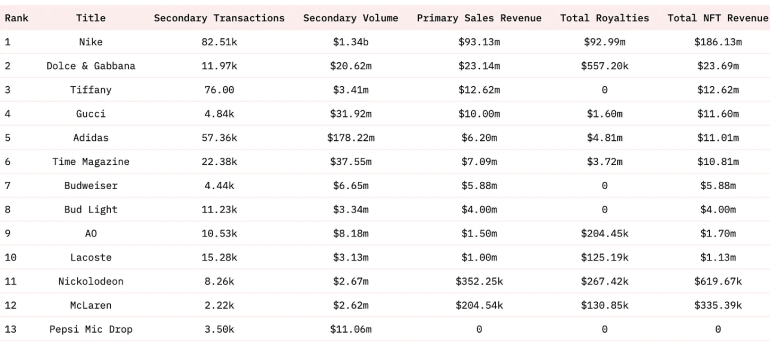
Gucci shoes, chicken nuggets, chips and beer. They could be ingredients for an evening in a bar of how we still know it before corona. They are also all products of which a Non Fungible Token (NFT) is made. In this article I discuss the latest developments in the field of NFTs and how you can do one yourself.

It’s not just a few innovative creatives who have launched an NFT. Celebrities such as Snoop Dog, Paris Hilton and Edward Snowden, and companies such as McDonald’s, Pringles and Lego are also stepping in. There are more than 3 million items for sale at the time of writing and sales worldwide in the last two months are up 2882%. The marketplaces where you can create an NFT are popping up like virtual mushrooms with more than $750 million in investments in the past quarter. Wonderful developments, but I do see 4 of them all.

1. Tragedy of the meet
The idea makers of NFTs who first came up with NFTs in 2014 did so with an ideology that technology should give artists control over their own work. This would make it easy to sell and they can protect work from misuse by others. In my view, this is also not the basic principle why many creatives put their work on the blockchain, with an NFT.

That’s why I think it’s really cool to see how DJs like Don Diablo are now making money through NFTs by selling a unique song. Or how Nigerians can suddenly serve a simple market. But things like beer from the sound of a fart don’t give the concept a good name in my opinion. Not to mention the red pixel, which is currently on offer for $900,000.

The warnings are therefore flying around the ears of various experts on all sides. And not with the general warnings for sharp price falls and financial losses of investment. NFTs are recorded on the blockchain. Even though this technology has already been nicely developed in many areas in recent years, NFTs are still new.

Garrett Hardin described this as beautifully as ‘tragedy of the commons’. If there is a common resource that everyone has an individual incentive to exploit, it will eventually dry up for lack of regulation of common standards. I now see this happening in NFT land and that makes an impossible search.

2. 404! Artwork not found
The number of cases of people suddenly losing their NFT and getting a 404 for the place is very strong. As the owner of an NFT, you are really dependent on the platform where you bought the NFT. Just like for cryptocurrencies, there are no clear laws and regulations that describe what your rights are. You can therefore not knock on the door of any authorities if a platform appears to be off if you make a mistake yourself when digitally storing your NFT.

As a digital thief you no longer have to go to a museum with a crowbar in your bag. You can rob a digital museum from home. The number of reports of digital robberies and scams therefore strongly influenced.

3. Not your keys, not your art
As with cryptocurrencies, an NFT is managed by a so-called ‘private key’. This is a cryptographic key of numbers and letters. You can store it, just like with cryptocurrencies, or have it stored in the place where you bought it. In the latter case, the platform holds the private key. In a recent hack of an NFT exchange Nifty, all keys were stolen and moved to the hackers’ wallets. Lost their NFT as well. The hackers only have the private key to the wallets of the hackers. These are, because of the cryptographic background, uncrackable.

The credo ‘not your keys, not your wallet’, or in this context ‘not your art’, is very relevant here. Setting up your own wallet for your NFTs is highly recommended. Online with a browser plugin such as Metamask or offline with, for example, a Ledger. You can check whether your NFT is stored securely on the Checkmynft website.

4. Copyright Confusion
The work of several well-known artists, such as Shakespeare, Beethoven and Charles Dickens, has become cultural heritage after their deaths. This is free for everyone to use. Quarrels between Italy and Italy over the use of the opera La Bohème Germany resulted in a general European directive. This makes the work of the author, 70 years after his death, a public good. Something the owners of Disney and Superman have long held back in the United States.

The new, NFT way of making, selling and distributing art automatically raises the copyright question. The digital artwork of Beeple, which was sold for $69 million, has now been made into a website, with which you can generate a new Beeple with a simple click on the button. Can that just happen?

I toured several lawyers in the Netherlands, specialized in intellectual property and technology law. They mainly point to the fact that when you buy a work of art you have the right to use it for personal consumption or to resell it. You are purchasing ownership of the item, not copyright. An NFT is nothing more than a digital proof, a receipt, with which you can prove the authenticity and prove that you are the owner. That receipt is on the blockchain and can therefore not be adjusted and is transparent for everyone.

In principle, the artist can make and sell an infinite number of copies of the digital artwork, with a unique NFT associated with it. As a buyer, it is therefore highly recommended to do good due diligence with the artist before buying a work of art. Is it a unique work or a copy?

How do you make an NFT yourself?
Many creatives I speak to and poll about this are enthusiastic. It provides a worldwide sales market with a few mouse clicks. And because of the removal of all kinds of intermediaries, it also ensures a greater yield for the creative person himself. It is also easy to make and put up for sale an NFT yourself. I list the steps below, and also watch the video for more explanation.

https://www.youtube.com/watch?v=_fWfPVL6wOA

Step 1: Why do you want to make an NFT?
Before you start, I recommend that you first ask yourself why you want to make an NFT. In my previous article on NFTs, I wrote about the obscene energy consumption required to make an NFT. That touches a lot of sensitive strings worldwide. Are you doing it for fun? Or really because you have a serious creation that you would like to sell?

Step 2: elaborate the legal framework
Also work out the legal framework well. What about property when selling? In the field of copyright, intellectual property and possible royalties. Look carefully at the conditions of the platform where you upload. What do you all agree to?

Step 3: choose a sales platform
The largest NFT selling platform is OpenSea. This is also the easiest to use, so I’ll use that in the next steps. You need a digital wallet for this, of which Metamask is the most used and can easily be added as a plugin in, for example, Chrome or on the iPhone.

Step 4: Link your wallet
At the top right of the OpenSea site, click Create > Submit NFTs. Then you link your MetaMask account to OpenSea in the next step.

Step 5: Upload your artwork
If MetaMask is linked, you will see the My Collections screen. There is also a big blue button with Create, with which you can upload your digital artwork just as easily as you do with a video on YouTube. Just upload the file, enter the correct title, description and keywords and the NFT is ready!

Step 6: Verify the work
You just need to verify the NFT. You can do this by clicking the Create button again and clicking authorize in the automatically opened MetaMask window. After that, the NFT will be live on the platform.

Using a platform like OpenSea is free, so you can repeat this process as many times as you want.

Tulip bulbs and bubbles
Tens of billions of basketball cards were printed in the United States in the 1980s, after respected media outlets like the Wall Street Journal and the New York Times labeled them inflation hedges and millions of Americans bought them as investments. Like the internet bubble that emerged decades later and the previous cryptocurrency bubble in 2017, they all eventually burst due to oversupply.

The current madness will continue for a while. Respected analysts expect the market to be worth many billions by the end of this year. Work is now underway on environmentally friendly NFTs and NFT museums have been opened in China, Russia and the United States. The sector is developing so fast that there are new developments every week. I watch them with enthusiasm.

Jan Scheele is active in the web3 (blockchain, crypto, NFTs, DeFi) industry since 2013. Besides (former) CEO of a web3 scaleup and founder of an advisory boutique (working for governments, family offices and several multinationals), he is Digital Leader at the World Economic Forum and Board Member at the Blockchain Netherlands Foundation (BCNL). He is writing, consulting, speaking and training regularly about everything web3, all over the world. Furthermore, he is currently finalizing his book about the rise and global impact of blockchain technology.

admin

Jan Scheele werkt dertien jaar op het snijvlak van deep tech, strategie en leiderschap. Als keynote spreker en dagvoorzitter maakt hij technologie tastbaar voor boardrooms, directieteams en grote podia, zonder de complexiteit te versimpelen of te verbergen achter buzzwords.

Zijn achtergrond ligt in het bouwen. Als CEO van een technologie scale-up, oprichter van meerdere techbedrijven en organisator van meer dan vijftig TED-events wereldwijd zag hij van dichtbij hoe technologische keuzes doorwerken in strategie, governance en cultuur. Vanuit zijn betrokkenheid bij het World Economic Forum en de BCNL Foundation kijkt hij daarbij niet alleen naar wat technisch mogelijk is, maar ook naar wat bestuurlijk houdbaar en maatschappelijk wenselijk is.

Hij publiceerde vijf boeken, waarvan twee Amazon-bestsellers, en schrijft wekelijks over AI, blockchain en de organisatorische gevolgen van deep tech. Zijn blogs bereikten inmiddels meer dan twee miljoen lezers.
What’s next for cryptocurrencies? 6 key trends

What’s next for cryptocurrencies? 6 key trends

Full piggy banks, negative interest rates, mistrust of governments and banks, but also enthusiasm for new startups, new possibilities and new technology. The hype surrounding cryptocurrency is getting bigger and crazier by the day. What can we expect in the coming months? In my latest article, I share the 6 key developments that will impact the cryptocurrency industry this coming summer. If you are only used to euros in your wallet, the names of the more than 9,600 different cryptocurrencies probably sound crazy to you. Dogs, hamburgers, Dracula and sperm… You can think of it as crazy as a digital currency has been named after it. It is no longer just the early adopters who buy these digital currencies.

According to a recent market effect study, 700,000 Dutch people have already invested in it and 3.5 million plan to do so in the coming months. According to research by Mastercard, that percentage is 40% worldwide.

Elon Musk has shown how strongly the sector can still be influenced with 1 tweet. If we zoom out and look at the previous bull run in 2017, we also saw a strong correction of -20% every month, which then quickly recovered. It will certainly not be the last correction in the market. Especially because in recent weeks it has been proven again how easy this is to achieve.

The Indomitable Bull

After the major crash of Bitcoin in late 2017 and the demise of hundreds of other digital currencies — the so-called ‘altcoins’ in early 2018 — I saw interest in the underlying blockchain technology and currencies fall just as much as the value of the currency itself. The few articles that appeared in the media were mainly negative in nature, focusing on the failed experiments of many organizations and the many myths surrounding crime and energy consumption, which were clearly not properly researched and substantiated. Bitcoin has since been declared “dead” 411 times.

It is wonderful to see how various startups and organizations have continued to build their products in the lee in recent years. Now that the flowers are blooming again, many of these products are being launched and enthusiastically received by investors. The insane amount of money saved during corona, the negative interest and the fact that saving is no longer profitable, has certainly ensured that interest in cryptocurrencies has taken a bird’s-eye view. And, The market is now very bullish.

The predictions of renowned institutions such as Bloomberg and banks such as Goldman Sachs that the price of Bitcoin can still rise to 100–150 thousand euros, only reinforces this. Moreover, The market value has risen from $200 billion to $2 trillion in just a few months. With the predictions about the number of new investors in cryptocurrencies, this will certainly have a strong positive effect on prices and market value.

2. To the moon… or not?

Unfortunately, the madness also creates various shadow sides. During the previous bull run in 2017/2018, I wrote about the importance of doing your due diligence before putting money into a cryptocurrency somewhere.

Bloomberg’s research into the previous bull run showed that 75% of the underlying cryptocurrency projects were outright scams. According to many reports, this resulted in billions of euros in damage, which the (mostly small) investors lost overnight and could not get back.

The many hacks of exchanges, where the cryptocurrencies are traded, also cause people to lose their digital currencies. North Korea has already made more than $2 billion from these hacks, according to a United Nations study.

People are looking for a still relatively unknown currency, which they hope will certainly ‘m00nen’ (go to the moon, crypto language for very strong rise in value). For example, the second best known and largest cryptocurrency, Ethereum, was worth 30 cents at its opening sale and has already surpassed $3,000 in value.

Crypto Influencers

In the search for these hidden gems, people quickly come across the crypto influencers on channels like Twitter and YouTube, who promote various cryptocurrencies with texts like “going to explode” and “going to the moon”. Some do this with a good financial-technical substantiation, as is also the case with stock prices, some purely with an unsubstantiated story, which later turns out to be paid for by the promoted projects themselves.

With the greatly increased value of cryptocurrencies, the number of investors and trading exchanges, it is becoming more and more lucrative for hackers and scammers to be active in the market. Even though security measures are increasing, it is becoming increasingly important as an owner / investor to take a good look at the security of your accounts and storage of the cryptocurrency itself. This is often not thought of, with all the consequences that entails.

3. Tulip bulbs in 2021

Just like in 2017/2018, I expect that the bubble will burst again at some point and the prices of many cryptocurrencies will fall very sharply. After the previous crash, the total market value fell by 80% in a few months, which was even more than the ‘dot-com crash’.

The fundamentals are stronger now. I expect that many projects will not suddenly disappear, because they already offer products and services and have thus become a full-fledged startup / scale-up. In addition, many large companies, banks and investors have invested in the various cryptocurrencies and have indicated that they will do so for the long term. Bitcoin treasuries provides a wonderful overview. All major banks worldwide have now also switched and are offering, or are going to offer, crypto to their customers: UBS, Goldman Sachs, Morgan Stanley and Deutsche bank. Dutch banks have indicated that they are not yet a fan.

In my view, various cryptocurrencies are therefore really here to stay. But currencies that even the creators have indicated that they created for fun (such as Dogecoin), I see in value and attention collapsing again in due course. There’s even a “dog token category” already, with token names like Shiba, Dogelon, Akita, and Ourshib.

Bubbles are good!

As I wrote in 2019: bubbles are good in my opinion. To separate the wheat from the chaff, take the hype off something and focus on real problems that a technology can tackle. They are rapidly providing wider acceptance, lots of PR and growth money for startups and budgets for organizations to experiment with and build on.

Think before you invest

As an investor in cryptocurrencies, it is extremely important to take a sober look at this yourself. Do you buy a cryptocurrency because just like in a regular company that you buy a share of, you believe in the mission / vision / product of the company? Or do you mainly want to gamble high risk high reward on a strong price increase? Unfortunately, research shows that 95% of people who choose the latter lose their money.

So take a good look at your current portfolio and any future purchase plans, to avoid coming home from a cold fair in the coming months.

4. Digital El Dorado

One of the biggest and fastest growing hypes in cryptocurrency and blockchain right now is certainly Non-Fungible Tokens (NFTs). More and more individuals and organizations are embracing digital art and collectibles. Recently, the total trading volume rose to the all-time high of $1.5 billion in one day. It’s not just the individual digital artworks anymore, like Beeple, which sold for $69 million. On the record day, half a billion worth of digital items were sold from the American basketball league NBA.

Traditional financial institutions are now slowly entering the world of cryptocurrencies, and so will the creative sector. From makers of art, music, films and books, to sports clubs and game developers, who put unique digital items on the blockchain.

Former employees of the two largest auction houses in the world (Christie’s and Sotheby’s) have set up Lobus, which makes it easier to manage art collections with NFTs, but also to (sell) partial ones. For example, you can purchase a digital artwork together with a few friends.

Meanwhile, the largest cryptocurrency trading platform in the world (Binance) has also announced that they are setting up an NFT platform. This will further increase the number of NFTs and their sales worldwide. As a result, the opportunities to trade in NFTs as a cryptocurrency investor are growing.

5. Bitcoin banking

The financial world is being shaken on all sides. The European PSD2 directive makes it possible for large technology companies such as Google and Facebook to enter the market.

A bit overshadowed by the NFT hype, but in my view at least as interesting is Decentralized Finance (DeFi). This revolves around decentralized financing instruments such as loans, savings and insurance, but also trade. The same products that we already know from banks and insurers, but the decentralized blockchain character ensures that the intermediary is removed.

Last year this market was worth a few hundred million, now the total value at the time of writing has grown to $130 billion, as much as the market value of banks like Deutsche Bank. In fact, the products have generated $250 million in the past month for the people who have invested in them.

DeFi on the rise

The various DeFi cryptocurrencies are growing at the same pace in numbers and value. The projects are growing and developing at lightning speed due to the madness in the cryptocurrency market. Not only the free PR, but also the amount of money invested in it, ensures rapid, major technological breakthroughs.

These are no longer just individual startups. Entire ecosystems are built with DeFi platforms, such as Persistence. Where the libertine-anarchist approach of Bitcoin was mainly aimed at making banks superfluous, you now see an interesting merger in many areas between the traditional financial institutions (CeFi, Centralized Finance) and DeFi. The Spunta project came from the European Payment Council, a large group of banks has set up the Marco Polo project and a large group of insurers B3i. The most recent highlight was the move by the European Investment Bank, which raised 100 million with a bond on the Ethereum network.

ING has indicated in a recent report (pdf) that they find DeFi more interesting than Bitcoin. A big step in the amalgamation of traditional institutions and these new decentralized variants and a starting point for an insane development around digital currencies.

6.Crypto Catch22

It is an interesting field of tension to exchange ideas with supporters and opponents of cryptocurrencies about regulation versus innovation. Governments are working in all kinds of areas to stimulate innovation, facilitate start-ups and organize a business climate, so that companies like to do business in our country. On the other hand, one of its core tasks is to protect citizens in the broadest sense of the word.

Current policy too strict
Media these days are full of articles about manipulation within the cryptocurrency market and the lack of understanding surrounding the lack of the right regulation. After the European Union announced that it would allow cryptocurrencies, the Netherlands wanted to become a frontrunner and example in terms of legislation and regulations in that area. Unfortunately, due to these strict laws and regulations, many companies have already stopped or moved to another country.

Now I am a big proponent of setting up a good legal framework in the field of cryptocurrencies. But if that stands in the way of innovation or even drives it away, I have my doubts about it. A recent court ruling between De Nederlandsche Bank and a cryptocurrency trader also confirmed that the current policy is too strict.

International cooperation needed

The recent IPO of cryptocurrency company Coinbase has been an important step for the industry, as the company has signaled from the outset that it is working with lawmakers to ensure a well-functioning industry. With the size and very large trading volumes now taking place within the sector, governments can no longer sit back and watch. This requires international cooperation. If it is made difficult for people to buy Bitcoin in the Netherlands, then they are with 1 click at a trading platform located in Malta, where they do have all the freedoms.

The most recent Crypto Crime Report from Chainalysis (the largest blockchain analysis company in the world) shows that less than 0.3% of cryptocurrency transactions are “suspicious” and that this percentage continues to decline. Something that former CIA director Michael Morell also endorses (pdf). Governments are still fully committed to the so-called ‘Know Your Customer’ and ‘Anti Money Laundering’ laws and regulations, even though they are widely known to be ineffective.

Governments react completely differently

We are currently seeing governments react completely differently. India, like Turkey, wants to ban cryptocurrencies. China is leading the way with the development of its own Central Bank Digital Currency, the most blockchain patents worldwide. And recently there was also the statement from the central bank that Bitcoin is an ‘alternative investment’. Even though it is causing power blackouts, according to the government, Iran continues to encourage the mining of cryptocurrencies such as Bitcoin.

In recent years we have seen how many companies have emerged and grown, despite increasingly strict legislation. From Uber and Airbnb to Google and AliBaba. I also expect that legislation and regulations will have an impact on the services within cryptocurrencies in the coming months. Important steps to make the sector more mature and thus more accessible to the general public.

More than a coin

In my view, due to the focus of many media on the prices of cryptocurrencies, we almost forget what all innovation is about: the cool products and services that are being developed.

The Limburg Fortuna Sittard was the first Dutch football club to release its own fan token. This allows fans to become more involved with the club in all sorts of ways. With his ‘Podcast 2.0’ model, Adam Curry offers podcast listeners the opportunity to thank / reward the creator with Bitcoin for every minute listened. In Heerlen, citizens are rewarded for volunteering with cryptocurrencies. Facebook is busy building its own digital currency ‘DIEM’ and has therefore teamed up with a company that will arrange the issuance of the coins. New developments are added daily, fueled by the large new amount of innovation money that is currently being pumped into the sector.

The new, the next, the never heard off

Steve Jobs wanted to put a cool phone on the market with the introduction of the iPhone. At the time, no one could have imagined that in 2021 we would work more than 4 hours a day with the device, with applications such as Instagram, Uber and Google Maps.

The same is the case with cryptocurrencies: we can only dream about what the next steps will be. Ethereum started out as the ‘supercomputer of the world’ with so-called ‘smart contracts’, but has now also become the foundation for the entire DeFi and NFT world. Waiting for the latest, brilliant invention. One thing is certain: crypto is here to stay.

This article is not financial advice and should not be viewed as such. It is my opinion and should only be seen from an info point

Jan Scheele is active in the web3 (blockchain, crypto, NFTs, DeFi) industry since 2013. Besides (former) CEO of a web3 scaleup and founder of an advisory boutique (working for governments, family offices and several multinationals), he is Digital Leader at the World Economic Forum and Board Member at the Blockchain Netherlands Foundation (BCNL). He is writing, consulting, speaking and training regularly about everything web3, all over the world. Furthermore, he is currently finalizing his book about the rise and global impact of blockchain technology.

admin

Jan Scheele werkt dertien jaar op het snijvlak van deep tech, strategie en leiderschap. Als keynote spreker en dagvoorzitter maakt hij technologie tastbaar voor boardrooms, directieteams en grote podia, zonder de complexiteit te versimpelen of te verbergen achter buzzwords.

Zijn achtergrond ligt in het bouwen. Als CEO van een technologie scale-up, oprichter van meerdere techbedrijven en organisator van meer dan vijftig TED-events wereldwijd zag hij van dichtbij hoe technologische keuzes doorwerken in strategie, governance en cultuur. Vanuit zijn betrokkenheid bij het World Economic Forum en de BCNL Foundation kijkt hij daarbij niet alleen naar wat technisch mogelijk is, maar ook naar wat bestuurlijk houdbaar en maatschappelijk wenselijk is.

Hij publiceerde vijf boeken, waarvan twee Amazon-bestsellers, en schrijft wekelijks over AI, blockchain en de organisatorische gevolgen van deep tech. Zijn blogs bereikten inmiddels meer dan twee miljoen lezers.

When will we get a digital Euro or Dollar? (CBDC)

When will we get a digital Euro or Dollar? (CBDC)

While the world is still fighting hard every day to get the coronavirus under control, another “cold war” is happening the background, the future of our money; the so-called Central Bank Digital Currencies (CBDC). Digital bank money is nothing new; worldwide only 8% of the money used is cash, the rest digital and in some European countries this is even less than 1%. The big difference with CBDCs is that the money is managed by a government and not a commercial bank. The revolution around cryptocurrencies and the underlying blockchain technology has sparked this discussion but has been accelerated over the past year by Facebook’s Diem (formerly Libra) project and the announcement that China is well advanced in developing its own CBDC. What is a CBDC, what are they used for and what can you expect? In this blog you will find all the information

It’s going to be the biggest change in the global financial system after Bretton Woods, according to experts. While in the early years of Bitcoin and blockchain the technology was still dismissed as “criminal” and “unnecessary”, in recent years the discussion has turned completely and most countries and economic regions have now started developing their own digital currency. According to research by the ‘bank of banks’, the Bank of International Settlements (BIS), dozens of central banks are now working on this, representing 80% of the world’s population and 90% of economic activity worldwide and will be 20 in the next 3 years. % of the world’s population have access to it.

“The euro belongs to Europeans and we are its guardian. We should be prepared to issue a digital euro, should the need arise.” Christine Lagarde, President of the ECB

In addition to Facebook and China’s announcements surrounding its own digital currencies, corona has given the discussion an extra boost, according to the European Central Bank (ECB). But it’s not just the pressure from other governments, technology companies and the sharp decline in the use of cash; according to the Dutch National Bank, it can also be used to implement monetary policy, such as reforms around debt and a basic income. According to the Russian Central Bank, their digital ruble is mainly intended to restore power over money to citizens and the Chinese Central Bank has indicated that it will not compete with existing payment apps.

CBDC Developments

The main reason for many central banks to develop their own CBDC remains the risks that commercial banks, such as ING and Rabobank take. According to a recent report by the Dutch Government’s Scientific Council, 10 years after the credit crunch, the commercial banking industry is still vulnerable to major blows. Especially in view of the consequences of corona and the risks that the banks still take, central banks want more control over the money flows. Now that the cash, which they manage themselves, is declining sharply and the influence of tech companies on the financial sector is increasing sharply, setting up their own digital currency is a logical step.

What a digital Euro can look like is clearly shown by the first CBDC recently launched in the Bahamas, the Sand Dollar and the many public experiments with Chinese CBDC, the DCEP. Many experts are frantically looking at the experiments in China, which will reportedly launch the coin globally during the 2022 Winter Olympics, to be held in the country. The country made the first banknotes in our global history and now sees 90% of all payments go through the popular apps WeChat and Alipay, the same size as the worldwide payment of Visa and Mastercard credit cards.

The totalitarian state

According to the government, it is not only a response to Libra, but mainly intended to remove all kinds of layers in payments and thus prevent corruption, combat poverty better and, according to many experts, also to control much more tightly where the money goes. This is also the biggest fear of residents of Europe, according to a recent survey by the ECB. The Chinese government is already going a long way with the control of its citizens, because of the more than 100 million cameras that hang in the country, the ‘social credit’ system and the countless algorithms that automatically determine on big data whether you are a criminal or not.

If, with this information and power over the money, it can also determine (by programming this in the code) whether and what citizens can spend the money on, then you are taking away a significant portion of the freedom. Imagine that a government programs that you can spend money on rent and healthy food, but not on fast food, cigarettes or porn. Or worse; because algorithms think you are engaged in criminal activity, your digital wallet is completely blocked. Due to the “social credit” system, already 23 million Chinese are no longer allowed to leave the country, because their score is too low.

Helicopter money

Even though most Chinese are not yet so enthusiastic about the Chinese DCEP, the government was able to get its citizens to create a digital wallet in a very smart way. Everyone who had installed a wallet on their phone received the digital currency deposited on it. “Free money for everyone,” historian Rutger Bregman would say. The adoption of this currency can therefore go very quickly. African countries are already preparing to use the currency in trade with China, and Huawei’s latest phone models already include a DCEP app. Investment bank Goldman Sachs expects the DCEP to be used by at least 1 billion users in 10 years and to facilitate nearly 20% of all payments in China.

“We need to make sure that our currency is fit for the future. Inaction is not an option.” Fabio Panetta, boardmember ECB

Behind the scenes, Europe is also working hard on its own “digital Euro”. European finance ministers, such as Germany’s Olaf Scholtz, have urged to do everything in their power to have an “answer” to the Chinese plans as soon as possible. Several European countries are already experimenting themselves, such as Italy, Ukraine and the Netherlands that even say they want to play a pioneering role in this. The European Central Bank has indicated in a recent report that it will only make a final decision in the summer of this year whether it wants to issue its own digital Euro and its president, Christine Lagarde, recently indicated that if the ECB decides to do so, it will certainly will take until 2025 before it is actually there.

The American Kodak moment

Also on the other side of the ocean, a fierce discussion about a digital dollar is raging. The head of the American bank has sparked the discussion here with the statement “we do think it is more important to get it right than to be first and getting it right”. However, experts point to the “first mover advantage” that China will have on the global financial scene, with all the consequences that entails. The Chinese government has already indicated that it would like to cooperate with other central banks worldwide, but with the aforementioned, far-reaching functionalities that the DCEP will have, this is mainly viewed with fear rather than enthusiastically worldwide.

There are still a lot of snags that need to be worked on before such coins can appear on the world stage, in my view. The more central the power over such a currency, the easier it is to hack. But also the informal economy, in which 60% of all jobs worldwide function and come under pressure from government regulated money. The International Monetary Fund also continues to question monetary stability, which can be affected by central bank issuance of their own currencies. The speed at which developments are currently taking place on the world stage are fascinating, but also frightening, when you consider the expected consequences of shifts in power. And, The coming year will therefore be a very interesting and important year for the global financial system.

CEO of Web3

Jan Scheele is active in the web3 (blockchain, crypto, NFTs, DeFi) industry since 2015. Besides (former) CEO of a web3 scaleup and agency, he is Digital Leader at the World Economic Forum and Board Member at the Blockchain Netherlands Foundation (BCNL). He is writing, consulting, speaking and training regularly about everything web3 all over the world. Furthermore, he is currently finalizing his book about the global impact of blockchain technology.

Jan Scheele is active in the web3 (blockchain, crypto, NFTs, DeFi) industry since 2013. Besides (former) CEO of a web3 scaleup and founder of an advisory boutique (working for governments, family offices and several multinationals), he is Digital Leader at the World Economic Forum and Board Member at the Blockchain Netherlands Foundation (BCNL). He is writing, consulting, speaking and training regularly about everything web3, all over the world. Furthermore, he is currently finalizing his book about the rise and global impact of blockchain technology.

admin

Jan Scheele werkt dertien jaar op het snijvlak van deep tech, strategie en leiderschap. Als keynote spreker en dagvoorzitter maakt hij technologie tastbaar voor boardrooms, directieteams en grote podia, zonder de complexiteit te versimpelen of te verbergen achter buzzwords.

Zijn achtergrond ligt in het bouwen. Als CEO van een technologie scale-up, oprichter van meerdere techbedrijven en organisator van meer dan vijftig TED-events wereldwijd zag hij van dichtbij hoe technologische keuzes doorwerken in strategie, governance en cultuur. Vanuit zijn betrokkenheid bij het World Economic Forum en de BCNL Foundation kijkt hij daarbij niet alleen naar wat technisch mogelijk is, maar ook naar wat bestuurlijk houdbaar en maatschappelijk wenselijk is.

Hij publiceerde vijf boeken, waarvan twee Amazon-bestsellers, en schrijft wekelijks over AI, blockchain en de organisatorische gevolgen van deep tech. Zijn blogs bereikten inmiddels meer dan twee miljoen lezers.

5 important developments for cryptocurrency in 2021

5 important developments for cryptocurrency in 2021

The best year ever and a catalyst for many more beautiful things to come next year. The Bitcoin price soared to an “all time high” and in its wake, the many “altcoins”, many big and established ones got in and several big projects, such as Ethereum, are about to launch big breakthroughs. Next year also promises to be a year like never before. In this blog the 5 most important developments that I am looking forward to.

Let’s look back first

Even though it is often said that a day in the crypto world is a year in a human life, the predictions I made in the past year have all come true. The halving, the halving of the pay of the miners of the Bitcoin blockchain network, would not itself lead to large price gains in May, but afterwards. We saw the Bitcoin price dip below $ 4,000 in March and as the year progressed, the price continued to rise, eventually surpassing the old record of nearly $ 20,000. The various crypto startups are also expected to have worked hard over the past year and come with big revelations every week.

The use of cryptocurrencies has increased exponentially worldwide with more than 100 million users and at one point last year 25,000 Bitcoin wallets (digital wallets) were created in 1 hour. Even though there is no telling what the “mother of all coins” Bitcoin will do in terms of price; predictions range from $ 0 to $ 1 million, fueling the massive wall of money being created by governments worldwide to combat the corona crisis, the move of many investors to cryptocurrencies.

Whales are on their way

Where in the previous big “run” in 2017, mainly the smaller retail investors bought cryptocurrencies, in recent months it was the turn of the “big boys”. Microstrategy bought half a billion dollars worth of Bitcoin and their CEO privately for a quarter, payment company Square put in $ 50 million and Paypal bought 70% of all newly created (mined) Bitcoins in the last month. The head of investments of Blackrock, the largest investor in the world, indicated that he no longer sees Bitcoin disappear and even gold disappears over time. That it is not just words, but also actions is evident from figures from, for example, Coinbase, which offers, among other things, “crypto custody”; securely storing cryptocurrencies and saw their digital storage increase in value from 6 to 20 billion dollars in a few months.

The nice thing about blockchain, and especially the Bitcoin blockchain, is that the transactions are all public. You can do very cool data analyzes on it, for example of the large investors, called the “whales”. A nice graphical analysis shows that the large Bitcoin “wallets” with a size of more than 1000 Bitcoin (value of 20 million euros or more) have increased very quickly and that these owners also hold the Bitcoins and do not sell them.

The bull just started to run

After two years of the so-called “bear market” in cryptocurrencies, a long period of declining prices, the “bull market” has finally arrived. The overall size of the market has grown by $ 500 billion since March and it doesn’t seem to be going to end. While the recent price increase is mainly attributed to the larger investors, we are now again waiting for the smaller retail investors. Bitcoin is back on the front page of De Telegraaf and NU.nl, the number of searches around “bitcoin price” has never been higher and it is becoming easier to buy cryptocurrency. Paypal announced that its 300 million users could now also buy, sell and store cryptocurrency, which has already been done by 20% of users in the United States.

With the recent approval by the Dutch bank of a handful of major Dutch cryptocurrency exchanges such as Coinmerce, it will not be long before I will be back in line at Albert Heijn or at the hairdresser. Not only Bitcoin, but also other cryptocurrencies, the so-called “altcoins” have increased in value tremendously and the price of some has even doubled or tripled in a short time. A well-known pattern; in recent years Bitcoin has always been first, after which the altcoins followed exponentially. Promising projects such as Ethereum, Chainlink and Polkadot were especially popular in this.

Big updates from the big boys

The popularity of the various cryptocurrencies is partly due to the major developments that have taken place in recent times and will be launched in the near future. After years of preparation, Ethereum, which is the second cryptocurrency in terms of market value, has started to launch the extensive 2.0 version of its network. An insane leap forward, because of the new way of validating transactions, which makes the network insanely faster, more stable and cheaper in one fell swoop. Because the network is increasingly used to build and run so-called ‘smart contracts’, but also DeFi (decentralized financing, which I wrote about earlier) so-called ‘DApps’ (decentralized applications) and ‘DAOs’ (decentralized organizations), it is also called the ‘supercomputer of the world’ and is attracting attention to more and more investors.

Even though mysterious Bitcoin founder or founders Satoshi Nakamoto has never been heard from, thousands of enthusiasts are still developing the code for this groundbreaking cryptocurrency every day. Problems that Bitcoin has been struggling with for some time; scalability and privacy are being addressed in the short term with the major updates Taproot and Schnorr. Another ‘top 10 project’, Cardano, one of Ethereum’s biggest competitors, comes with the major ‘Govuen’ update, which focuses even more on decentralization and makes all kinds of functionalities available to companies, such as ‘smart contracts’ and ‘DApps’. . With its 3.0 update, NEO will realize its major ambitions to create such a scalable blockchain that the transaction speed is at the level of that of regular banks.

CryptoCrime is on the rise

A lot of money unfortunately also attracts the wrong people; criminals have now also found the virtual route well and billions of cryptocurrencies were stolen last year. Recently another $ 150 million at the major trading exchange KuCoin. According to the United Nations, these are not only self-employed crooks, but even the government of North Korea, who has now stolen an estimated $ 2 billion, mainly to help develop nuclear weapons. Unfortunately, cybersecurity expert Kasparsky also expects criminals to become more interested in cryptocurrencies in the coming year. Especially the newer “DeFi” projects, which often grow too fast to be able to continue to guarantee safety, fall victim to this, as happened recently with Balancer, Akropolis and Opyn.

That cryptocurrency is only for terrorists and criminals, was recently disproved by a board member of Chainalysis, the largest crypto-data analysis company in the world, at a blockchain event that I recently organized in Amsterdam. Although more and more ‘ransomware’ attacks are taking place for which cryptocurrencies are demanded by criminals, the number of criminal transactions has fallen far below 1% and investigative agencies such as the FBI and the Dutch Police even admit that cryptocurrencies enable them to collect criminal money. to follow.

It is up to the government

Even though the industry is becoming more and more mature, there are also many things that are absolutely unacceptable, such as artificially inflating prices. Due to the “pacing” problem, governments are always lagging behind in drafting and implementing laws and regulations, due to the rapid development of certain technologies.

The strict Dutch legislation has ensured that various Dutch cryptocurrency exchanges have now been registered with and are supervised by De Nederlandse Bank. But many of the largest stock exchanges worldwide, such as Binance and Bitmex, are avoiding this dance by establishing themselves in tax and regulatory havens like the Kaayman Islands and Sechelles.

The CEO of Paypal, Dan Schulman, who, as I wrote earlier in this blog, has made it possible for customers to buy, sell and hold cryptocurrency, has therefore called on the industry to proactively sit down at the table with the regulatory authorities, in order to prevent major obstacles from being thrown up in all kinds of ways by international bodies and national governments as a kind of ‘counter-reaction’. Right, now that mass adoption is starting to take such beautiful forms.

MICA

The European Union introduced the “MICA” in September; regulations surrounding the cryptocurrency market. Ambitious and mainly focused on stimulating responsible innovations. Once approved, it will apply to all 27 member states and will finally provide broader clarity about the rights and obligations surrounding cryptocurrencies for consumers and organizations. In my view it contributes to a maturing market and will, due to the certainty it will offer, also attract more and more consumers and companies, to both use it and invest in it, which ultimately benefits the entire market. come.

It will be a special year, with the launch of DIEM immediately in January, the renamed cryptocurrency project Libra, which Facebook has initiated, the launch of the Chinese DCEP (digital government currency) and much more. Last year was already one to write in the books in the field of cryptocurrency, 2021 could very well exceed that!

Jan Scheele is active in the web3 (blockchain, crypto, NFTs, DeFi) industry since 2013. Besides (former) CEO of a web3 scaleup and founder of an advisory boutique (working for governments, family offices and several multinationals), he is Digital Leader at the World Economic Forum and Board Member at the Blockchain Netherlands Foundation (BCNL). He is writing, consulting, speaking and training regularly about everything web3, all over the world. Furthermore, he is currently finalizing his book about the rise and global impact of blockchain technology.

admin

Jan Scheele werkt dertien jaar op het snijvlak van deep tech, strategie en leiderschap. Als keynote spreker en dagvoorzitter maakt hij technologie tastbaar voor boardrooms, directieteams en grote podia, zonder de complexiteit te versimpelen of te verbergen achter buzzwords.

Zijn achtergrond ligt in het bouwen. Als CEO van een technologie scale-up, oprichter van meerdere techbedrijven en organisator van meer dan vijftig TED-events wereldwijd zag hij van dichtbij hoe technologische keuzes doorwerken in strategie, governance en cultuur. Vanuit zijn betrokkenheid bij het World Economic Forum en de BCNL Foundation kijkt hij daarbij niet alleen naar wat technisch mogelijk is, maar ook naar wat bestuurlijk houdbaar en maatschappelijk wenselijk is.

Hij publiceerde vijf boeken, waarvan twee Amazon-bestsellers, en schrijft wekelijks over AI, blockchain en de organisatorische gevolgen van deep tech. Zijn blogs bereikten inmiddels meer dan twee miljoen lezers.

Mijn wekelijkse

Shot inspiratie

Elke week ontvangen 400+ mensen een shot deep-tech inspiratie. Ook ontvangen? Schrijf je hier rechts gratis in.

Ik spam nooit en gebruik het mailadres
alleen voor deze nieuwsbrief.

Copyright © 2026 Jan Scheele

Ook elke week een shot deeptech inspiratie?

Meld je aan om elk weekend een gratis shot inspiratie te ontvangen in de mailbox.

Ik spam nooit en gebruik het mailadres
alleen voor deze nieuwsbrief.

Paid Search Marketing
Search Engine Optimization
Email Marketing
Conversion Rate Optimization
Social Media Marketing
Google Shopping
Influencer Marketing
Amazon Shopping
Explore all solutions