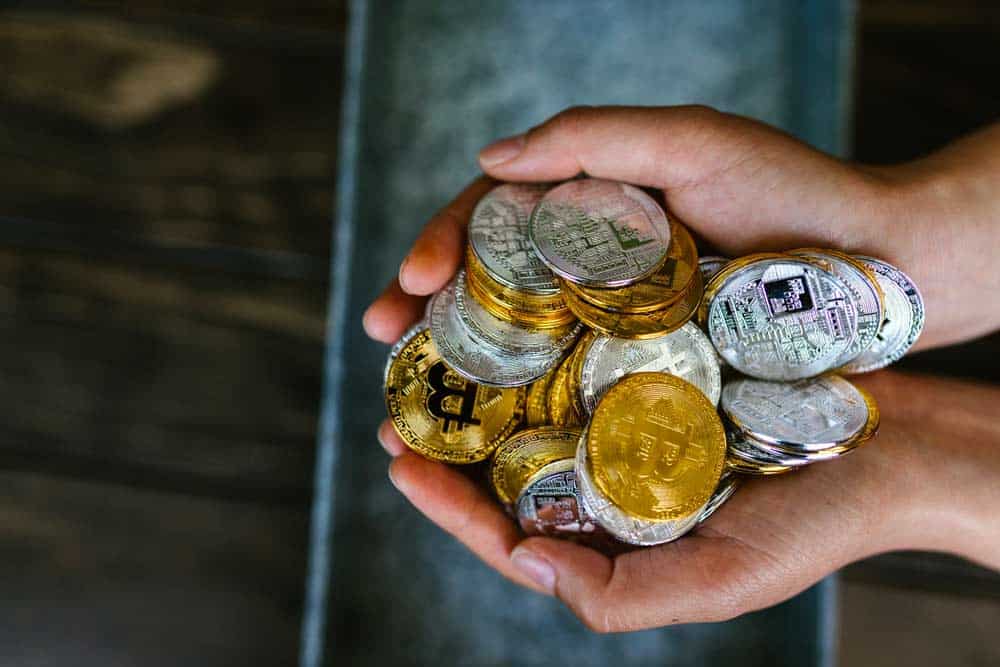
The Decentralized Dream Of Blockchain Is Shattered

The Decentralized Dream Of Blockchain Is Shattered

That was not was the intention!

The fact that Satoshi published the white paper just a few weeks after the major financial crash was related to his initial idea of using the decentralized nature of the Bitcoin blockchain to remove power from financial intermediaries such as banks and return it to the citizens. That fact that one of the companies that can be very much blamed for the financial crisis, the JP Morgan bank, recently introduced its own “coin” is a development that can best be described as “special” — especially as this is used for a closed, so-called “permissioned” blockchain that can only be accessed by JP Morgen and selected customers. This is something that completely goes against the open and transparent ideology that has been used for designing blockchain technology.

The same applies to the Facebook “coin”. Experts refer to it as “regaining control over your own data” (or “killer app”, which I discussed in a previous post) which is one of the biggest advantages of the blockchain technology. The fact that Facebook, the company that has been so controversial in recent times due to its disproportionate slurping and abusing of data, is developing its own “coin” has led to many experts ringing the alarm bells; will the decentralized character of blockchain not be lost again, because of a few large companies who will run away with the technology? It is not a thought that scares everybody immediately; when a small percentage of Facebook users use the “coin”, the number of worldwide crypto users would double immediately. That sounds positive for the adoption and further development of the ecosystem.

Further Developments

The most recent research from the European Union seems to confirm this. The study shows that it is precisely the private (often corporate) platforms that drive the adoption, rather than the open ones, such as Bitcoin. This is mainly because the developers of the closed platforms have much more freedom over the further development in the field of safety and speed, where open platform developers discuss and decide these kinds of further developments in a decentralized manner, which often requires a lot of time.

According to the definition, decentralization includes the distribution of various functionalities, power, people and all sorts of things from a central point. This ideology was initially witnessed at various large technology companies such as Spotify, who took away the distribution of music from the major distributors and placed it back with the musicians themselves. Uber did the same as it took away the power from large taxi companies and placed it with the drivers, and Paypal did so too by transferring bank transactions from the banks to the owners of the money. Unfortunately, we see many of this kind of company centralizing power in all kinds of ways themselves by, for example, buying up innovative startups, increasing entry barriers for competitors to a sector, or simply increasing their often almost monopolistic market share.

Blockchain Technology

The same is currently happening with blockchain technology, especially in the area of maintenance (“mining”) of the blockchain networks and ownership of the most important cryptocurrency. The top 6 largest maintainers of the Bitcoin blockchain, the so-called “miners”, control 75% of the global network because of their computer power. Some 75% of all this global mining capacity hails from China. What about the ownership of the coveted Bitcoins? The top 1,000 addresses own 40% of the total number of circulating Bitcoins.

Whereas the so-called “Initial Coin Offerings” (the blockchain alternative of the IPO of a company) contained many beautiful, decentralized properties, the so-called “Security Token Offering” (which I referred to in my previous post as the most-hyped cryptocurrency of 2019) has again had a lot of dealings with central authorities. Stablecoins too (which I previously described as a very important development in the field of cryptocurrency) remove the important, decentralized properties such as executing transactions without an intermediary while it is exactly these properties that made cryptocurrency so popular and practical.

Dutch Central Bank

Someone from the Dutch Central Bank recently asked me about the impact of blockchain during my keynote and “whether you want to decentralize everything”, whether it is good to remove authority where possible and place the power back with the citizen. Various platforms that aimed to do this with via the Internet in the past few years suddenly faced their social limits in many ways, after which everyone turned to the central governments for measures. It’s nice that they are still around, isn’t it?

Personally, I do not believe that every part of society is better off decentralized. However, I do already see many groundbreaking applications of the blockchain technology that, by means of decentralization, can have a tremendous impact on our society, and that would not have emerged if they were governed centrally. And this is despite the fact that we have only just begun development….

Jan Scheele is active in the web3 (blockchain, crypto, NFTs, DeFi) industry since 2013. Besides (former) CEO of a web3 scaleup and founder of an advisory boutique (working for governments, family offices and several multinationals), he is Digital Leader at the World Economic Forum and Board Member at the Blockchain Netherlands Foundation (BCNL). He is writing, consulting, speaking and training regularly about everything web3, all over the world. Furthermore, he is currently finalizing his book about the rise and global impact of blockchain technology.

Security Token Offerings – The Hype of 2019 and also the catalyst of the cryptocurrency market?

Security Token Offerings – The Hype of 2019 and also the catalyst of the cryptocurrency market?

Housewives generating content, Geert Wilders, bananas and managing your own grave. These are just some bizarre examples of focus areas of the many thousands of so-called “Initial Coin Offerings” (ICOs) that took place in 2017 and 2018. Although many blockchain experts initially saw ICOs as a way of setting up a community around an organization, most organizations mainly used their ICO to quickly and easily raise money from investors. Therefore it has become a form of crowdfunding for blockchain projects, where investors can participate for small amounts and receive “coins” or “tokens” in return. According to research from PWC, ICOs raised $10 billion in 2017 and $11 billion in 2018, which amounts to an average of $25 million per ICO. The largest ICO, EOS, raised no less than $4.2 billion.

The combination of the ease with which organizations collected money, the poor due diligence from (mostly new and inexperienced) investors, and the lack of regulation from governments lead to an enormous amount of fraud. Of the many thousands of projects, 81% ultimately turned out to be scams and always almost left the investors empty-handed. Many large investors are calling for measures to prevent scams and to restore confidence in the cryptocurrency market. Many studies confirm this and indicate that regulating the market will also result in a significant increase in investment. This would not only be from current investors, but also from the large established financial service providers that currently wait for this to take place.

The Next Step In Cryptocurrency: STOs

One of the most frequently-cited trends in cryptocurrency for 2019 is the Security Token Offerings (STO), which is also referred to as the solution to the above-mentioned problems and which is expected to facilitate $10 trillion in transactions in 2020. The concept was introduced by PolyMatch and there are now around 150 STOs active worldwide.

When talking about obtaining crypto or token in exchange for financial investment, Security Token offerings are very similar to the well-known ICOs. However, where an ICO does not have any voting rights, has no underlying value and is mainly used for access to an application or speculation on future growth, an STO makes you the owner of a real investment product, which is linked to an underlying asset, such as a share.

Performing an STO is a lot more complex since you have to comply with a lot of regulations and have to go through all sorts of complex procedures in order to comply with these regulations. This is also the main reason why most startups convert their plans for an ICO into an STO. It also prevents a lot of scams as the many background checks almost make it impossible for a scam to survive such procedures.

Why Not A Regular IPO?

Many traditional financial experts wonder aloud why STOs are needed instead of simply continuing to work with regular IPOs that have been used successfully for decades. I personally consider ICOs a great step towards more financial inclusiveness. Where regular IPOs, such as those of Adyen, can only be entered into by large institutional investors, most ICOs can already be supported with just a couple of tens. In addition, it makes it a lot easier for startups to raise money and grow a community, without having to search long for the right Venture Capitalist or bank.

There are a number of differences between IPOs and STOs, which make the latter very interesting. STOs can be traded 24/7 and are settled almost immediately, whereas IPOs can only be traded only during opening hours of the stock exchanges and, as a result, it sometimes takes days before the transaction is settled. By using so-called “smart contracts”, it is possible to pay out dividends and acquire treasury shares automatically. In addition, smart contracts remove many intermediaries and their work, which in turn saves a lot of time and money.

But Why Don’t We Immediately Switch Completely To STOs?

During the training sessions on blockchain and cryptocurrency that I am allowed to give, financial experts often ask me why STOs are not already more well-known and why they are not being used more often. I find Security Token offerings a very interesting tool for protecting the sector from scammers, making it a lot healthier and more trusted. However, it completely contradicts the decentralization for which blockchain was originally conceived. As STOs are under the strict supervision of the financial authorities, such as the AFM in the Netherlands and SEC in the United States, Security Token offerings are a no-go for many blockchain enthusiasts. One of the best-known cryptocurrency exchanges, Binance, has announced that they will not support STOs.

Other big names in the industry, such as Coinbase, state that they will start doing so from the end of this year. Some countries, such as China, have prohibited STOs because they see them as “illegal financial activity”: “I want to warn those who are promoting STO fundraising in Beijing. Don’t do it in Beijing. You will be kicked out if you do it. You can only engage in such activities with the approval of the government” (Huo Xuewen — Hoofd Financial Bureau Beijing)

What Are The Next Steps?

The first Dutch STOs have already been announced, such as van Ockel and Blockport (update: the last one was aborted). Various sites show in easy step-by-step plans how you can establish an STO, such as that of the “inventor” of STOs, Polymath. There are also several nice overviews of STO projects worldwide. Ultimately the investor is the smiling third; they can invest in companies easier, faster, safer and cheaper.

Jan Scheele is active in the web3 (blockchain, crypto, NFTs, DeFi) industry since 2013. Besides (former) CEO of a web3 scaleup and founder of an advisory boutique (working for governments, family offices and several multinationals), he is Digital Leader at the World Economic Forum and Board Member at the Blockchain Netherlands Foundation (BCNL). He is writing, consulting, speaking and training regularly about everything web3, all over the world. Furthermore, he is currently finalizing his book about the rise and global impact of blockchain technology.

TalkLikeTED.nl speaker coaching / presentatietraining / presenteren zoals de ted talks

8 Most Important Tips For Finding And Reviewing Initial Coin Offerings (ICOs)

8 Most Important Tips For Finding And Reviewing Initial Coin Offerings (ICOs)

The quest for the new Apple

The rapid rise of blockchain technology and cryptocurrency has also resulted in the growing popularity of “Initial Coin Offerings”. Over the past two years, several startups have managed to raise tens of millions of euros in a few seconds, making many of their investors very wealthy despite only being active for a few hours. This is something that is impossible in the regular financial market. According to research from PWC, $10 billion was raised in 2017 and $11 billion in 2018, which amounts to an average of $25 million per ICO. The largest ICO, EOS, raised no less than $4.2 billion.

However, several national and international authorities, rightfully, point to the dangers of investing in these ICOs.

ICOs?

ICOs are a sort of crowdfunding, usually for projects on the blockchain. In exchange for an investment, the lender receives coins or tokens. Whereas startups such as Adyen raise money with a normal IPO, only large, institutional investors can participate. ICOs also allow investors with a small budget to invest. However, ICOs often do not have a working product or service yet, and since there is no central authority controlling their activities, there is nobody you can approach when something goes wrong. Therefore, it can be considered risky; research by PWC showed that no less than 81% of ICOs turned out to be scams.

Since money is being raised for the development of an idea in particular, rather than the further development of a product, the prices of the coins made and issued at an ICO are often very low. However, if the product becomes successful, the return will be insane. That is why many people are looking for the “new Bitcoin” or the “new Apple”, whose shares have grown in value by 29,000% since the first time they were issued.

Here are my top 8 tips for finding a good ICO to prevent you from becoming the owner of a bag of coins that are worthless.

1) Team

Despite having a good idea or great product, if someone is surrounded by the wrong team, it will be likely that the startup will still fail. That is why it is important to seriously research the individual founders, team members, partners, and advisors. For example, do they have the relevant experience in crypto and/or blockchain technology and in the market in which they want to be active? Obviously, you want to have people who have years of experience in the industry in which they want to operate and who have actually achieved something in this regard. ICOs have an important extra point that requires attention: does the team exist? There are many cases where the team members and advisers did not exist or were not involved in the project at all, which was often a precursor to a scam (fraud).

Therefore, carefully check the Linkedin/Twitter profiles of those involved too. Are they active? How long have they been active? Is it clearly stated that they also work for the ICO? Some ICOs drop the names of important people as being their advisors (such as former Prime Minister Balkenende) while, in fact, those people have had absolutely nothing to do with the ICO.

2) Why?

“Just because you can, doesn’t mean you should” — Sherrilyn Kenyon

Unfortunately, many ICOs have fallen into the “me too” trap; they made a cheaper, faster version of something that already exists instead of developing something really insanely disruptive that perfectly responds to the blockchain. As an investor you, obviously, want the product or service to be really sought after. That is why it is very important to look at the “why” of the ICO. Will the concept possibly replace the competition? Will it be the answer to visible or predictable market demand? Have clear, specific goals been defined? Is it for long term use? Is it market individuals, organizations, companies?

Will large, existing companies were not able to develop this much easier, faster and better themselves? The clarity with which this has been described will also have an impact on the team. In the most ideal situation, the team will be able to already show a prototype or proof of concept.

3) White Paper

Thorough deliberation of the “white paper”, a hip term for “business plan”, will be key in judging an ICO. The website can be beautiful and a lot of marketing can be done, but if the concept lacks a strong white paper that explains the concept then you will have to ask yourself whether you want to invest. Apart from the concept, issues such as the background, goals, and strategy of the ICO also deserve attention. It is certainly worth investigating the implementation and development “roadmap”: the “why” described above, the way success and goals will be measured and what potential obstacles have been identified. Furthermore, the legal relationships between investors and the ICO, the issuance of the coins/tokens (how and when this happens) and the financial models are important to validate credibility and reasonableness.

4) Community

A good ICO has or is working on, a large, strong community that is fed updates regularly. That is why it will be good to investigate whether the ICO and the individual team members are active on social channels such as Facebook, Twitter, and Reddit. Many good ICOs also have a good, open support community on Slack and Telegram.
 
 But … is the ICO not active on the largest forum in this field, BitcoinTalk? That will justify the immediate discounting of it as a possible investment. Check this forum too to see how the team responds to questions and comments and whether the people who respond are not brand new members of the forum. A good ICO has no so-called “bounty posts” (paid messages that spread good news). Make sure you are aware of this.

5) Website

Way too many ICOs still use a standard WordPress or WIX template for their website, unfortunately. A website is really an important part of the success of the ICO because this should attract investors and customers. That is why it is important to review the website very carefully. Bad design is often because a team does not want to invest enough time and money in smart marketing. This will be a death blow to the project. Have a good look at the design. Does it look professional? What kind of images has been used? How is the concept explained? Is it easy to understand? Many ICOs try to impress potential investors by using all sorts of weird terms that they often cannot even explain to their own friends. The same applies to the reason why blockchain should be used: this is often farfetched.

“If you can’t explain it to a six-year-old, you don’t understand it yourself.” — Einstein

6) Code

Obviously, an ICO wants to be as open and transparent as possible at the start. The code of the project is an important part of this and which is almost always published on Github. Github is the world’s most popular online tool for collaborating on (mostly open-source) software. The management of it and was recently acquired by Microsoft.
 
You can analyze the code and determine the quality of the ICO in various ways. One way is to look at the number of “commits” (adjustments). Another is to review the “Insights” tab for the general summary of all developments. The consistency and length of the code (functions with more than 50 lines of code must be immediately rejected) and the processed comments are good parameters for quality too. If the ICO does not disclose the “smart contract node”, it is either unstable or the code has probably been copied from another ICO. These are both certainly good reasons to stop considering investing.

7) Token Sale Distribution

When reviewing the distribution of the tokens, you obviously want an ICO that would rather issue few tokens at a low price. When you are looking for an investment that will experience a large increase in the long term, then it must, of course, have the lowest possible valuation and price (review the increase of coins on Coinmarketcap that have a supply of less than 100 million). If the opposite case is you, you would often see that a price drop occurs quickly after the launch of the ICO. This stabilizes the net asset value. You can, therefore, ask yourself whether an ICO that wants to raise 50 million to build a product that will yield 1 million per year is worth the investment.

Also, consider the distribution of the tokens; how many are sold, distributed to advisers or ultimately end up with the team? Some teams take it too far by paying themselves more than 50% of the tokens as a reward for rendered (but yet to be proven) services.

The correct distribution of tokens is linked to the roadmap since every step in the development needs some financing. This folder also always indicates correctly when the tokens are being issued. Will this be immediately after the ICO or only when the beta version of the product has been launched?

8) Seat Of The Company

Many ICOs that later turned out to be scams were hiding behind a “shell company” on a tropical paradise. It is worth establishing when the ICO is seated. Is there a clear contact address and is the Initial Coin Offerings (ICOs) really located here? Although the world lacks laws at ICO level, in most countries it is legally possible to tackle fraudulent companies and individuals.

This post does not provide financial advice and should not be viewed as such. It is my own framework and should only be viewed from an informative perspective. Make sure you do your own research before you invest in an ICO!

Jan Scheele is active in the web3 (blockchain, crypto, NFTs, DeFi) industry since 2013. Besides (former) CEO of a web3 scaleup and founder of an advisory boutique (working for governments, family offices and several multinationals), he is Digital Leader at the World Economic Forum and Board Member at the Blockchain Netherlands Foundation (BCNL). He is writing, consulting, speaking and training regularly about everything web3, all over the world. Furthermore, he is currently finalizing his book about the rise and global impact of blockchain technology.

Op zoek naar de nieuwe Apple: investeren in een ICO

Op zoek naar de nieuwe Apple: investeren in een ICO

Met de snelle opkomst van de blockchaintechnologie en crypto-currency is ook het investeren via ICO ‘Initial Coin Offerings’ snel populair geworden. Verschillende startups haalden in de afgelopen twee jaar soms in enkele seconden vele tientallen miljoenen euro’s. En veel beleggers zijn schatrijk geworden met hun investeringen, die soms maar een paar uur actief waren. Iets wat in de reguliere kapitaalmarkt onmogelijk is. Hoe zorg je dat je een goede investering doet?

Volgens onderzoek (pdf) van PWC werd hiermee in 2017 $10 miljard en in 2018 $11 miljard opgehaald, wat neer komt op gemiddeld $25 miljoen per ICO. De grootste ICO, EOS, haalde maar liefst $4.2 miljard op. Verschillende nationale en internationale autoriteiten wijzen (pdf) echter, geheel terecht, op de gevaren die het investeren in deze ICO’s met zich mee brengt.

ICO’s?

ICO’s zijn een soort crowdfundingactie, meestal voor projecten op de blockchain. In ruil voor een investering ontvangt de geldschieter coins of tokens. Bij start-ups zoals Adyen, die met een normale beursgang (IPO) geld ophalen, kunnen enkel grote, institutionele beleggers instappen. Bij ICO’s kunnen ook investeerders met een klein budget meedoen. ICO’s hebben echter vaak nog geen werkend product of dienst en aangezien er geen centrale autoriteit is die het geheel controleert, kun je bij niemand aankloppen als er iets misgaat. Het is dan ook niet zonder risico: maar liefst 81% van de ICO’s bleken achteraf scams te zijn, volgens onderzoek van PWC.

Er wordt met name geld opgehaald voor de ontwikkeling van een idee, in plaats van een doorontwikkeling van een product. Daarom zijn de prijzen van de gemaakte en uitgegeven coins bij een ICO vaak erg laag. Maar als het product succesvol wordt, dan staat daar een waanzinnige return tegenover. Veel mensen zijn dan ook op zoek naar de ‘nieuwe Bitcoin’ of de ‘nieuwe Apple’, waarvan het aandeel 29.000% is gestegen sinds de eerste uitgifte.

Mijn top 8 tips voor het zoeken naar een goede ICO, om te voorkomen dat je bag holder van een waardeloze zak coins wordt.

1. Team

Iemand kan nóg zo’n goed idee of mooi product hebben, als het team niet klopt, dan kan de start-up alsnog falen. Daarom is het belangrijk om veel onderzoek te doen naar de individuele oprichters, teamleden, partners en adviseurs. Hebben ze bijvoorbeeld relevante ervaring in de crypto- en/of blockchain technologie en in de markt waarin ze actief willen zijn? Je wil natuurlijk mensen hebben met jarenlange ervaring in de industrie waarin ze willen opereren, en die hierin ook echt dingen hebben bereikt. Bij ICO’s is daar nog een belangrijk extra aandachtspunt bijgekomen: bestaat het team wel? Er zijn veel zaken bekend waarbij de teamleden en adviseurs niet bestonden of helemaal niet betrokken waren bij het project.

Dat was veelal een voorbode voor fraude. Check daarom ook goed de LinkedIn- en Twitter-profielen van de betrokkenen. Zijn ze actief? Hoe lang zijn ze al actief? Staat er duidelijk vermeld dat ze ook werkzaam zijn voor de ICO? Sommige ICO’s noemen namelijk belangrijke mensen als adviseurs (zoals oud-premier Balkenende), terwijl ze helemaal niks met de ICO te maken (willen) hebben.

2. Why?

Just because you can, doesn’t mean you should – Sherrilyn Kenyon

Veel ICO’s zijn helaas in de ‘ik ook-val’ getrapt: een goedkopere, snellere versie van iets maken wat al bestaat, in plaats van iets echt waanzinnig disruptiefs te ontwikkelen wat perfect inspeelt op de blockchain. Als investeerder wil je natuurlijk wel dat het product of de dienst echt nodig is. Daarom is het van groot belang te kijken naar de ‘why’ van de ICO. Gaat het concept de concurrentie mogelijk buitenspel zetten? Gaat het een zichtbare of voorspelbare vraag uit de markt bedienen? Zijn er duidelijke, concrete doelen omschreven? Is het voor langetermijngebruik? Is het voor particulieren, organisaties, bedrijven? Gaan grote, bestaande bedrijven dit niet veel makkelijker, sneller en beter zelf ontwikkelen? Hoe vager dit alles omschreven is, hoe onduidelijker het waarschijnlijk ook voor het team is. In de meest ideale situatie, kan het team al een prototype of proof of concept laten zien.

3 Whitepaper

De kern van het beoordelen van een ICO is zeker het grondig doorspitten van de ‘whitepaper’, een hip woord voor businessplan. Er kan nog zo’n prachtige website zijn en een hoop marketing. Als er niet een sterk whitepaper beschikbaar is, waarin het concept goed wordt uitgelegd, dan moet je je als investeerder afvragen of je hier überhaupt geld in wil stoppen. Naast het concept, verdient het ook zeker de aandacht om goed te kijken naar zaken als de achtergrond, doelen en strategie van de ICO. Het is interessant om de roadmap (tijdlijn) van de implementatie en ontwikkeling goed tegen het licht te houden. De hierboven beschreven ‘why’, hoe succes en doelen worden gemeten en wat mogelijke obstakels zijn. Verder zijn de juridische verhoudingen tussen investeerders en de ICO, de uitgifte van de coins/tokens (hoe en wanneer dit gebeurt) en de financiële modellen belangrijk om de geloofwaardigheid en redelijkheid te toetsen.

4. Community

Een goede ICO heeft of werkt aan een grote, sterke community, die het regelmatig voedt met updates. Daarom is het goed om te kijken of de ICO en de individuele teamleden actief zijn op sociale kanalen zoals Facebook, Twitter en Reddit. Veel goede ICO’s hebben daarnaast een goede, open support community op Slack en Telegram.

Maar… staat de ICO niet goed op het grootste forum op dit gebied, BitcoinTalk? Dan kun je hem direct afschrijven als mogelijke investering. Kijk op dit forum ook hoe er door het team wordt gereageerd op vragen en opmerkingen en of de mensen die reageren, geen splinternieuwe leden van het forum zijn. Een goede ICO heeft geen zogenaamde bounty posts (betaalde berichten die goed nieuws verspreiden), dus let hier ook op.

5. Website

Helaas zie je nog te veel ICO’s die een standaard WordPress- of WIX-template gebruiken voor hun website. Een website is echt een belangrijk onderdeel voor het succes van de ICO. Hiermee moeten immers investeerders en klanten worden aangetrokken. Het is dan ook belangrijk dat hier heel zorgvuldig naar wordt gekeken. Een slecht design is veelal te wijten aan een team dat te weinig tijd en geld in slimme marketing wil steken. Een doodsteek voor het project. Kijk dus goed naar het design. Oogt het professioneel? Wat voor afbeeldingen zijn er gebruikt? Hoe is het concept uitgelegd? Is het makkelijk te begrijpen? Veel ICO’s proberen mogelijke investeerders te imponeren met allerlei rare termen, die ze veelal zelf niet eens aan vrienden kunnen uitleggen. Ook de reden waaróm blockchain moet worden gebruikt, is vaak nog ver te zoeken.

If you can’t explain it to a 6 year old, you don’t understand it yourself – Einstein

6. Code

Een ICO wil bij de start uiteraard zo open en transparant mogelijk zijn. Belangrijk onderdeel hierbij is de code van het project, die vrijwel altijd wordt gepubliceerd op Github. Gitbhub is wereldwijd de populairste online tool om samen te werken aan (veelal opensource)software en het beheren ervan en werd zeer recentelijk overgenomen door Microsoft.

Je kunt op verschillende manieren de code analyseren en de kwaliteit van de ICO bepalen. Enerzijds door te kijken naar bijvoorbeeld het aantal commits (aanpassingen) en anderzijds via de ‘Insights’-tab naar de algemene samenvatting van alle ontwikkelingen. Ook de consistentie en lengte van de code en het verwerkte commentaar zijn goede parameters voor de kwaliteit. Zeker een reden om een investering achterwege te laten. Functies met meer dan 50 lijnen code moet je direct afkeuren, aangezien het de mogelijkheid voor anderen om eraan te werken, sterk verkleint.

7. Token sale-distributie

Bij het kijken naar de distributie van de tokens, wil je natuurlijk liever een ICO die weinig tokens uitgeeft tegen een lage prijs. Als je naar een investering zoekt die op lange termijn een grote stijging gaat maken, dan moet deze natuurlijk een zo laag mogelijke waardering en prijs hebben (kijk maar eens op Coinmarketcap naar de stijging van coins die minder dan 100 miljoen supply hebben). In het tegenovergestelde geval zie je na de lancering van de ICO vaak dat er snel een prijsval plaatsvindt, die de intrinsieke waarde stabiliseert. Je kunt je dus afvragen of een ICO die 50 miljoen wil ophalen, om daar vervolgens een product mee te bouwen dat 1 miljoen per jaar opbrengt, valide is.

Kijk ook goed naar de verdeling van de tokens. Hoeveel worden er verkocht, uitgedeeld aan adviseurs en belanden er uiteindelijk bij het team? Sommige teams zijn iets te gortig, door meer dan 50 procent van de tokens aan zichzelf uit te keren als dank voor de bewezen en nog te bewijzen diensten.

Een goede tokendistributie is gelinkt aan de roadmap, aangezien elke stap in de ontwikkeling een stukje financiering nodig heeft. Deze map geeft ook altijd goed aan wanneer de tokens verstuurd worden. Direct na de ICO of pas als de bètaversie van het product wordt gelanceerd?

8. Vestiging

Veel ICO’s die later een scam bleken te zijn, verscholen zich achter een shell company op een tropisch paradijs. Bij het analyseren van de ICO moet je dan ook zeker kijken waar deze gevestigd is. Is er een duidelijk contactadres aanwezig en is de ICO hier ook echt gevestigd? Hoewel er op ICO-vlak wereldwijd nog niet veel wetten bestaan, is het juridisch wel degelijk mogelijk om frauderende bedrijven en personen in de meeste landen aan te pakken.

Dit artikel is geen financieel advies en moet ook niet zo worden gezien. Het is mijn eigen framework en moet enkel worden gezien vanuit een informatieve insteek. Doe je eigen onderzoek voordat je in een ICO investeert!

Ten Ways How Blockchain Will Radically Impact The Tourism Industry

Ten Ways How Blockchain Will Radically Impact The Tourism Industry

In the last month, I made a wonderful trip with my father through Brazil. The destination was also one of the highlights; the carnival in Rio de Janeiro. Being a blockchain fan, I was very enthusiastic to witness how one of the schools that colored the fantastic parade had chosen the theme “the evolution of money” and, subsequently, also had dressed a few people like Bitcoin. The popularity of cryptocurrency has risen sharply in South America recently, mainly due to the instability of the regular (fiat) currency in countries such as Venezuela, where thousands of predominantly small companies now accept the well-known cryptocurrency Dash. Let’s see how blockchain technology will impact the Tourism sector.

For a few years already, I have had the pleasure of carrying out various advisory processes for governments at home and abroad in the field of “Destination Marketing & Management; improving its findability and visibility of a destination”. A frequently asked question various governments posed me in recent times is ‘what will be the impact of blockchain?’ and ‘what is currently happening in the sector regarding this topic?’. The sector was valued at over $7.5 trillion (10% of global GDP) in 2018 and generates over 100 million jobs directly, according to the United Nations, and this obviously makes it interesting to review the many ways in which technology can and will have an impact. My top 10:

Demolishing The Power Of The OTAs

The power of Online Travel Agents (OTAs), such as Booking.com and Expedia, is a growing annoyance for many hoteliers and airlines. Apart from the high fees charged by OTAs, the loss of vital customer data and the increasing monopoly and additional effects are becoming a problem for affiliated companies. One of the best-known attributes for which blockchain is widely praised, and which will cause major breakthroughs, is its ability to cut out the middleman. Last year, the CEO of TUI already expressed his expectation that the technology would make “monopolistic intermediaries” (in his view, OTAs) disappear in the coming five years.

Several cool blockchain startups are already working on a solution to make this become reality. The best known is Winding Tree, which has developed a decentralized marketplace where hotels, airlines and tour operators can assist their customers directly. Contrary to the current OTAs, the platform lacks the drive for profitability or aim to obtain the biggest possible market share. It has recently managed to attract many important partners, such as KLM, Lufthansa, and AirCanada. In addition, there are also destinations that use the Winding Tree platform, such as Aruba. At present, a handful of OTAs is collecting the bulk of the revenue that the 1 million plus tourists generate for the country. By offering its own token, the country wants to decentralize its offering and grant both small and large players the same opportunities.

OTAs – tourism sector

In addition to Winding Tree, there are around twenty other companies that are competing with the OTAs. Webjet from Australia focuses specifically on hotel bookings and has already signed up Thomas Cook and a number of very large Asian hotel chains as partners. Locktrip too focuses on hotels and has already linked 100,000 hotels to its platform. It claims to make bookings 19% cheaper on average and has recently substantiated this claim. Other well-known parties that are also pursuing greener pastures are Atlas, Blockskye, and KeyoCoin.

The Decentralized Business Sector

Just like the OTAs, blockchain will also have an interesting impact on the business sector. Several start-ups with proofs-of-concept have already developed a decentralized solution for well-known platforms such as Uber and Airbnb. One of the best known is Beetoken, which connects landlords directly with potential tenants and encapsulates the entire process, from securing payments to reviews once the agreement has ended. It wants to end the many scams that currently affect Airbnb and charges a commission that is only 20% of the fees that Airbnb charge.

The company Slock takes it one step further; they want to help the business sector in different ways by, for example, granting safe access to different types of IoT devices such as the lock of the door of a rental apartment. By arranging the entire process of concluding a transaction, including payment, to user verification and granting access, they believe they offer accommodation owners a complete solution. Organizations that are creating similar solutions are Populstay, Travala, Trip.io, and Travelblock.

Of course, the large business sector platforms recognize both the opportunities and the threats of blockchain technology. They themselves have already started implementing the technology. For example, Airbnb has acquired the ChangeCoin startup, mainly to incorporate blockchain specialists into its business. It is not known if Uber has any concrete plans to use blockchain but several parties, such as DAV, Fairride and Lazooz, are already working on making a decentralized alternative for Uber.

Digital Identity – tourism sector

One of the major problems the tourism sector faces is the identification of people. Issues like fraudulent payments and bookings result in high costs for companies. The various times at which a customer has to identify him/herself results in wasted time and therefore annoyance. There are already several companies, such as Shocard, that have used blockchain to devise unique solutions, making the entire process much faster, more efficient and safer. So-called ‘smart contracts’ can automatically check whether all documents, such as passports and visas, are valid and can grant access to an airport, and also store the identity document (such as a passport) on the blockchain, to enable to verification of the identity at any time.

The unchangeable and distributed nature of the technology prevents fraud and helps the entire process to take place quickly and efficiently. The implementation of this is already at an advanced stage in countries such as Dubai and Aruba, while in Spain a system that only focuses on identification has already been successfully adopted.

Real Ratings & Reviews

A holiday was previously booked through a travel agency or tourist office, but now the way in which we choose a destination and book a holiday has changed completely. Many studies show that 84% of consumers consider online reviews on Google and platforms like Tripadvisor as important as word-of-mouth recommendations from friends, while 87% will not even book with a company that has negative reviews.

Unfortunately, this is also being misused; research has established that 85% of companies in the tourism sector are plagued by fake reviews. The English newspaper The Times claims that one-third of Tripadvisor reviews are fake and Harvard Business School calculated that 20% of Yelp reviews are fake.

Several friends that run a business in the sector tell me that they are sometimes even being blackmailed to offer something for free to prevent a negative review despite this is often not even justified. Blockchain technology can make a major breakthrough here since the information published on it is transparent and cannot be changed. Companies like Revain and Chlu have devised solutions that ensure that reviews can no longer be faked, changed or deleted. These are important solutions for this ever-growing problem in the sector.

Fast And Affordable Payments

The first blockchain, that of Bitcoin, began as a purely electronic “peer-to-peer cash system”, to enable digital payments without a middleman. The many applications that have already been successfully implemented, therefore, largely cover the field of ​​payments. As the global hotel industry alone was worth nearly $500 million in terms of revenue last year, you can probably imagine the insane number of transactions that are taking place in this industry. When we consider the costs that this entails, like fees charged by credit card companies and the previously-discussed OTAs, using blockchain can save a significant amount of money for both the provider and the buyer here.

In addition, there are already several companies that make the transactions significantly faster and the technology itself makes the whole experience a lot safer and more traceable. Many destinations and organizations already offer payments in cryptocurrencies, such as San Francisco, Argentina, Queensland (Australia), Germany, Dubai, hotels and various booking websites. Ireland even goes one step further and introduced the IrishCoin to reward tourist loyalty in addition to payments generated. Greece has introduced “NautilusCoin”.

Becoming And Staying Loyal

Loyalty programs are very important for many organizations active in the tourism sector. However, the problem with the current programs is that consumers often do not really understand these programs and that companies often, unfortunately, fail to extract the desired data. A recent report from consultancy firm PWC describes the great opportunities loyalty programs offer when placing them on the blockchain. Collected loyalty points can be saved on the blockchain and, therefore, are immediately exchangeable and visible for the user. On the other hand, organizations can save advertising costs by making real-time, personalized offers based on the data generated and customer profiles, while fraud can be prevented.

By sharing the data with chain partners (for example, an airline, car rental company, or accommodation owner), even more, interesting data can be obtained while the “booking experience” by the consumer can be optimized even further. Apart from various organizations, several countries have also placed their loyalty program on the blockchain. A well-known company that facilitates this service is Loyall, which is already used by the governments of Dubai and Norway. The companies Trippki and Deskbell have solely focused their solutions on the hotel industry.

Saving Data Securely

Not having access to their own data and systems cause nightmares for many companies. Hackers are becoming increasingly smart and nowadays install so-called “Ransomware hacks”, which means that a person or organization can only access data once a ransom has been transferred. This became painfully clear in Austria last year, where a hotel was hacked and only regained access to the hotel room keys once ransom had been paid to the hackers.
 Due to its decentralized and cryptographic nature, blockchain technology offers a great solution for safer data storage to prevent this being lost due to a cyber-attack or, for example, accidental deletion.

Never Lose Luggage Again

The loss of luggage is one of the biggest annoyances for travelers. In addition to being without clothing, not knowing where items are is very annoying and is a bad start to a journey. Last year, the international flight organization IATA stipulated in Resolution 753 that airlines should increase the number of scanning points for baggage during the journey and make these points more compatible. At the moment, blockchain is being considered in order to make the entire process, from baggage drop-off to receipt by the owner, more transparent. By giving each item a unique code, constantly scanning it and logging its location in the blockchain, the exact location of a piece will be visible in real-time. This will not just provide a great solution to consumers but also, for example, for the transport of goods.

Fewer Empty Seats And Beds

Although various technologies, such as AI and ML, have reduced the number of empty seats on airplanes and empty beds in hotels, this is still a major financial problem for providers. Travel organization TUI was the first company to publicly state that it had put all its data on the blockchain. The company, with a turnover of almost €20 billion, can view the total hotel bed stock in real time and, based on big data, still offer flexible margins through various partners. According to the CEO, their “BedSwap” project allows them to save many millions of euros per annum. The Austrian startup Avinoc does something similar to airplane seats.

New Ways Of Traveling – tourism sector

Recent research shows that millennials trust cryptocurrency better than shares, and as a result, the popularity of digital assets among young people is therefore high. Many organizations use this knowledge cleverly by offering special trips. Not only do they offer trips in cryptocurrency, but they also offer Blockchain Cruises for fans of this technology, an Airbnb for crypto dealers called CryptoCribs, and various tours to blockchain hubs like Zug (Switzerland).

Destinations On The Blockchain

In addition to the tourism companies and many technical suppliers with their platforms, several countries are already proactively working to apply blockchain technology in different ways within their own tourism sector. Dubai aims to have the first “blockchain government” in 2020 and already offers various working solutions with the technology, such as a decentralized distribution channel for hotel rooms. Moldova witnessed a significant increase in medical tourism through the use of blockchain technology while the head of tourism for the Russian government, Oleg Safanov, said the matter has top priority in its department. Australia even has its first Digital Currency Town.
 
According to the many companies that are working on solutions, cool new blockchain solutions for the tourism market are released every week. The question of how this will impact the industry makes me very curious!

Jan Scheele is active in the web3 (blockchain, crypto, NFTs, DeFi) industry since 2013. Besides (former) CEO of a web3 scaleup and founder of an advisory boutique (working for governments, family offices and several multinationals), he is Digital Leader at the World Economic Forum and Board Member at the Blockchain Netherlands Foundation (BCNL). He is writing, consulting, speaking and training regularly about everything web3, all over the world. Furthermore, he is currently finalizing his book about the rise and global impact of blockchain technology.

The Quest For The Killer App

The Quest For The Killer App

Email, social media and applications such as iTunes and the Google search engine are indispensable in our daily lives. Apart from being useful applications that have had a major impact on humanity, they have also ensured the mass adoption of the Internet technology itself. The applications are so important to us that we buy devices so we can use it, just like the light bulb resulting in the global acceptance of electricity. Such applications are also referred to as “killer apps”. PC Magazine calls them “the beginning of a completely new breed”. For computers, these were the precursors of Word and Excel: Visicalc and Wordperfect; for the Internet, the Mosaic web browser, email, and later iTunes and social media.

Many blockchain enthusiasts are also eagerly looking for the first real killer app for this new technology. Cryptocurrency traders find this particularly interesting because they think that the value of their currency will increase as a result, while technology enthusiasts want to make the many, groundbreaking benefits of safety, efficiency and decentralized options more accessible to consumers.

Experts stumble over each other while discussing developments within the blockchain technology that have led or might lead to the first killer app. On the one hand, there are applications such as CryptoKitties and the launch of the Bakkt crypto platform, and on the other hand, there is the successful implementation of the blockchain technology and additional benefits for industries ranging from online gaming, publishing, and travel to cross-border payments, the Internet of Things and supply chain management.

Vitalik Buterin, the founder of Ethereum, the largest cryptocurrency after Bitcoin, wrote:

“If there existed some particular application to show that blockchain technology is massively superior to anything else … then people would be loudly talking about it already … And so far, there has been no single application that anyone has come up with that has seriously stood out to dominate everything else on the horizon.”

However, it is still difficult for Western consumers to designate a real killer app. According to the recent reports from Deloitte and McKinsey, the successful developments in the field of blockchain mainly take place in the area of financial transactions. Furthermore, it appears that most successful implementations are mainly achieved by large companies themselves. They prefer to keep them secret for reasons of competition.

The investment bank Morgan Stanley also indicated that we are not there yet:

“We are now firmly in the middle of the proof-of-concept phase of development. Blockchain still hasn’t had a true test. Early signs are that this is a promising technology, but many of the big questions have yet to be answered, and it hasn’t been tested at scale in a complex, fast-moving business environment.”

If experts are correct and blockchain technology follows the same development path as the Internet, then it will certainly take another 10 years before we can expect a real killer app. In about five years the technology will end up on the “plateau of productivity” of the Gartner Hypecycle and will experience the same growth spurt in a further five years, similar to what the Internet experienced in terms of adoption and investment in its creation.

Personally, I think that shifting focus can certainly speed up the process. At present, a lot of time, money and attention is given to the efficiency successes that large companies make with the technology and the transforming effect it has on the global financial industry. Hopefully, these things continue to be considered.

I actually find the impact on developing countries much more interesting! There are 1.5 billion people without proof of identity (such as a Passport or birth certificate), more than 2 billion people without a bank account, much large data hacks every day and many countries are still suffering from corruption. The many practical blockchain solutions that tackle these global problems are, in my opinion, the real killer apps. Therefore they will really have the global impact that everyone is really waiting for.

Jan Scheele is active in the web3 (blockchain, crypto, NFTs, DeFi) industry since 2013. Besides (former) CEO of a web3 scaleup and founder of an advisory boutique (working for governments, family offices and several multinationals), he is Digital Leader at the World Economic Forum and Board Member at the Blockchain Netherlands Foundation (BCNL). He is writing, consulting, speaking and training regularly about everything web3, all over the world. Furthermore, he is currently finalizing his book about the rise and global impact of blockchain technology.

Three Blockchain Focus Areas For Governments

Three Blockchain Focus Areas For Governments

Voting, national crypto, and regulation

Before this summer, the polls will open three times; for the elections of the Provincial States, the European Parliament, and the Water Boards. In my previous posts, I discussed how many local governments in the Netherlands are experimenting with blockchain technology and are at the forefront compared to the rest of the world. Our national government also wants to be at the forefront, but especially in the field of regulations regarding cryptocurrency. There are three ways in which our Dutch government can lead in the field of blockchain technology:

Vote With Blockchain

Anno 2019, despite our insanely technologically-developed country, we still vote by means of a red pencil and a printed ballot. In my home province Limburg alone, four municipalities had to recount the votes during the municipal elections last year, for which no fewer than 50 civil servants had to work two days extra in my hometown of Maastricht. Although “only” 29 errors were discovered, this eventually led to the CDA having to hand over a full seat to their political opponents, D66.

The voting process is the heart of democracy and, in my view, this should really go as smoothly as possible. In various other countries, especially in developing nations, we still witness a lot of fraud and corruption during elections; something that can be prevented with blockchain technology. In addition, results can be announced and made transparent much quicker to increase confidence in the process itself.

Sierra Leone was the first country to put elections on the blockchain and several other countries followed this up with successful tests. This includes the United States, Switzerland, and South Korea. More than 30 countries, such as Japan, Spain, and Ukraine, are currently investigating whether they can enable voting via the blockchain.

Researchers do not agree yet whether implementing technology is a good idea. One study indicates that the turnout will increase, but Radboud University’s advisory report to the House of Representatives mainly predicted major disadvantages. Disadvantages that already have been removed by applications from various companies such as Kaspersky (the well-known virus scanner), FollowMyVote, Voatz, and Agora.

Recent research by the Swiss government showed that almost 80% of the population would like to vote via the blockchain and that only 2% were against it. Hopefully, the red pencils in the Netherlands can soon be added to the museum of democracy!

A Dutch Cryptocurrency

Whereas various governments are trying to ban cryptocurrencies from their countries, by banning trade and advertising cryptocurrencies, the head of the International Monetary Fund (IMF) advocates that central banks should seriously consider introducing their own cryptocurrencies in order to make payments faster and to run more safely.

In 2014, an unknown Icelandic resident already introduced his Auroracoin, which should replace the national currency. In 2015, the governments of Tunisia and Equador launched their own cryptocurrency and several other countries are currently experimenting with it. This is not entirely uncontroversial; the Venezuelan government launched the “Petro” to, among other things, circumvent the US sanctions against the country. It appears that Russia, for the same reason, wants to introduce its own “CryptoRuble”.

In Europe, Estonia wanted to lead the way with its own “Estcoin”, but was recalled by the European Central Bank claiming that “no Member State may introduce its own currency in addition to the Euro”. Although enthusiasts have already introduced the Dutch cryptocurrency “Gulden”, it will take some time before the Dutch government will introduce its own variant.

Much Needed Regulation

According to a recent proposal by the Dutch Minister of Finance, Wopke Hoekstra, the Netherlands wants to play a pioneering role in the field of cryptocurrency in Europe, especially in the field of buying and selling cryptocurrency and setting up a so-called Initial Coin Offering.

It would be good for the Dutch government if they went a few steps further and immediately take a wider view regarding general laws and regulations concerning blockchain technology. A large study by Deloitte revealed that uncertainty and lack of clarity about regulations is currently the main reason that organizations have yet to embrace blockchain. Fortunately, the EU is already working hard to make the GDPR legislation blockchain more friendly, yet there are still many questions about the national legal frameworks for implementation and the use of technology by organizations.

Endless Possibilities

The possibilities are endless for governments with blockchain technology. From practical applications, such as collecting taxes and putting food logistics on the blockchain in England and India to prevent waste, to wild ideas of a “Futarchy” in which forecasting markets such as Augur determine which government policy has the most effect. Every week I read about successfully-completed pilots from governments and cool new ideas that are being introduced. Hopefully, we can replace the pencil with a retinal scan at the next election!

Jan Scheele is active in the web3 (blockchain, crypto, NFTs, DeFi) industry since 2013. Besides (former) CEO of a web3 scaleup and founder of an advisory boutique (working for governments, family offices and several multinationals), he is Digital Leader at the World Economic Forum and Board Member at the Blockchain Netherlands Foundation (BCNL). He is writing, consulting, speaking and training regularly about everything web3, all over the world. Furthermore, he is currently finalizing his book about the rise and global impact of blockchain technology.

The 5 Most Important Blockchain Developments In 2019

The 5 Most Important Blockchain Developments In 2019

It is going to be a very interesting year for blockchain. In the past year, the technology has been further developed and subjected to many experiments. This was done by the many startups working on groundbreaking blockchain products and solutions, as well as by organizations that implement the technology in different ways. Giant steps are currently being made in terms of scalability, privacy, efficiency, security and, of course, regulations.
 
 McKinsey claims that the technology is still in the pioneering phase of its industry life cycle. One of the people involved in founding the concept in 1988, Tim May, went further by saying that the founder of what we know today as Bitcoin and Blockchain (the mysterious Satoshi Nakamoto), “would be ashamed to see the current status of technology”.
 
 Nevertheless, many organizations are investing heavily in blockchain. PWC calculated an average of US$ 500,000 per company and 11% of organizations invest as much as US$ 10 million. According to IBM, which employs 1,500 people on 500 blockchain projects, the main reason to invest is to save costs and to organize processes more efficiently. A study by Deloitte concluded that, in the end, 74% of executives believe that it ultimately will bring value to their organization. Gartner predicts that this will be worth a whopping US$ 3.1 trillion in 2030.
 
 A question that is often posed to me during presentations and by clients is: What can we expect from the technology in 2019? Here are the top 5 developments that I’m looking forward to.

The Quest For The Successful “Use And Business Case”

Where the media predominantly focuses on failed blockchain implementations, such as that of Tony Chocolony, or generally portraying the technology as ‘a solution for almost nothing’ and ‘a revolution that doesn’t change your life for a while’, fortunately, there are many positive messages coming out every day. Such as that of the firm Albert Heijn, which has already streamlined its logistical processes more efficiently, and various banks such as ING, which is making great strides in areas such as security. These desperately-needed “use and business cases” of the technology will play an important role in its success and further development in the coming year.

Obviously, organizations must be able to defend their investments. According to Deloitte organizations will, therefore, focus more on applications where blockchain can really make a difference. Too often it is believed that technology provides a solution to all global problems, leading organizations to consider how the technology should be implemented instead of whether it should be. Sometimes choosing other emerging technologies, such as robotics and artificial intelligence, prove to be the better choice.

Restore The Image

Cryptocurrency and blockchain technology are often regarded as one concept. In fact, blockchain technology can easily exist without cryptos. Since the digital currency market lost 80% of its value in 2018 and still suffers from high volatility, as well as negative reports about criminal transactions and fraud, the blockchain technology also continues to suffer (in my eyes) from an incorrect image.
 Although many positive cryptocurrency developments are expected in 2019 (read here my 5 crypto predictions for 2019), blockchain itself will really have to work hard on restoring its image — especially as Forrester predicts that 90% of blockchain projects will never see the light, something that feeds the claims skeptics always has made.

Governments Are Surprisingly Ahead

Whereas at the start of the blockchain, many only observed the revolution in the financial system, currently many governments are at the forefront of experimenting with and successfully implementing the technology. In previous articles, I enthusiastically addressed the many blockchain projects the local governments in the Netherlands are currently setting up and implementing. According to blockchain legend Vinay Gupta, this has resulted in the Netherlands even overtaking countries like Dubai and Singapore.
 The high level of security and the scattered nature of the data in the blockchain has seen a large number of governments choosing the technology. Experiments are no longer small; countries such as Estonia, Switzerland, and Thailand have already placed entire elements of their services on the blockchain. IBM has just signed a $740 million deal with the Australian government to implement the technology, and France is considering making €500 million available for this.

Linking With IoT, ML, And AI

It is anticipated that in 2019 20% of IoT developments will be developed with blockchain. The many already-working applications are proof that the collaboration of both technologies can lead to many cool, new use cases. Like the collaboration with technologies such as machine learning and artificial intelligence, each greatly reinforces the other and provides various new, pioneering solutions. Some experts even believe that blockchain will become the game changer for IoT.

DAPPS

The founder of Ethereum, Vitalik Buterin, predicted for 2019 that “the next wave is not based on hype but on working apps.” He wants Ethereum to cause a small revolution by means of so-called “smart contracts”. An important development in the blockchain technology on the Ethereum network is “dapps”, decentralized applications of which the software and data (as the name states) are stored separately. Because data is no longer stored centrally, organizations such as banks and Facebook will soon no longer be in control of their customers’ data.

Ultimately, that will ensure that we ourselves regain control of our data. A good example is Brave, whereby the user decides which data they want to share with the advertiser, something that is rewarded in tokens. However, the real revolutionary applications still have to be introduced; “CryptoKitties” is still the best known and widely used application. It allows you to raise and collect digital cats. However, many experts predict many important app launches in 2019.
 
 Of course, there have been many other developments witnessed in the area of blockchain, such as the massive demand for blockchain experts, the sharply increasing investments of venture capitalists in technology, and many great collaborations within blockchain consortia such as R3 (financial institutions), B3i (insurers) and MOBI (car manufacturers). I, therefore, will follow the developments with great enthusiasm and interest in the coming year!

CEO of Web3

Jan Scheele is active in the web3 (blockchain, crypto, NFTs, DeFi) industry since 2013. Besides (former) CEO of a web3 scaleup and founder of an advisory boutique (working for governments, family offices and several multinationals), he is Digital Leader at the World Economic Forum and Board Member at the Blockchain Netherlands Foundation (BCNL). He is writing, consulting, speaking and training regularly about everything web3, all over the world. Furthermore, he is currently finalizing his book about the rise and global impact of blockchain technology.

5 Cryptocurrency Developments To Look Forward To In 2019

5 Cryptocurrency Developments To Look Forward To In 2019

2018 turned out to be a disaster year for many investors in cryptocurrency. Expectations were high after the crazy price increases of Bitcoin and other cryptocurrencies witnessed prior to and in 2017. Unfortunately, after an all-time high in January, crypto prices soon dropped to a low point and many coins lost up to 95% of their value. The many hacks, scams, regulations, the Google/Facebook ban on crypto-related advertisements, and the war in the Bitcoin Cash camp attributed to the negative exchange rates. In the past year, the media declared Bitcoin dead more than 100 times and its link to the many “altcoins” ensured that those rates were highly dependent on those of “mother” Bitcoin and therefore also decreased significantly. Despite researching the Netherlands showing that the number of investors in cryptocurrency has decreased by 100,000, another recent study showed that the number of investors worldwide has doubled. During my lectures, I am often queried about the most important developments in the field of cryptocurrency that 2019 has in stock for us.

Here are my top 5:

Mass Adoption With BAKKT?

BAKKT is one of the most discussed and promising projects that cryptocurrency must make accessible to the general public. The preparations for the launch of this open and regulated trading platform should give users the option to not only to trade in cryptocurrency and assets but to also store and spend them.

With the platform being funded by the owner of the New York Stock Exchange and built in collaboration with Microsoft and Starbucks, it has the involvement of some serious organizations and individuals.
 The involvement of Starbucks is very interesting since most payments in the United States are currently made with the Starbucks app, even more, than with Apple Pay. In addition, the regulated trading in a transparent platform and the solution it offers for transaction times has drawn the attention from many large institutional investors and it may turn the stock market upside down. Unfortunately, the launch of the platform has already been delayed twice, since more time is needed for both streamlining the customer registration process and for obtaining approval from the US government. However, various authoritative experts from the sector claim that this won’t last much longer.

Will there finally be an ETF in 2019?

While BAKKT is ready to be launched, it remains very unclear when the first ETF will be approved. An Exchange Traded Fund is a so-called “index tracker”, which follows the official price of an asset without the owner owning it. It enables investors to easily speculate on the price rise or fall of Bitcoin without owning the crypto. This offers a solution to many investors since they don’t want all the hassle that comes with purchasing Bitcoin and other cryptocurrencies. It is anticipated that the approval of the first ETF will see a large influx of institutional investors with significant amounts of money to spend. Often the comparison is made with the first ETFs on gold, which has multiplied the value of the precious metal many times.

There have been dozens of proposals for ETFs, but they have all been rejected by the US SEC, as they consider the market to not yet be sufficiently regulated and developed. According to the SEC, there is still insufficient evidence for the required size and volume of the market and too much chance of manipulation and fraud. The STC claims that there is a lack of regulations to prevent this from happening and, if it does, to punish it. The ETF application from VanEck, the party known for its ETFs on gold, currently has the best chance of success.

Unfortunately, the decision on this application has already been postponed a few times. The absence of practical solutions to combat fraud is the reason why various experts don’t expect that it will be approved in 2019. That would be a pity as the approval of an ETF will be precisely the “stamp of approval” many institutional investors are waiting for to invest in cryptocurrencies.

Does The Institutional Tidal Wave Follow?

Apart from BAKKT and ETFs, there are also many other projects that can facilitate a tidal wave of institutional money flowing into the cryptomarket. This will, of course, be one of the most important developments for the market for both confidence and influence on prices. Many companies are eager to invest, but the lack of the right infrastructure and regulations has made them hesitate.

Various products that resemble ETFs are already active. BinckBank offers a Bitcoin ETN and certificates in Switzerland can be used to invest in a basket of cryptocurrencies via Bitcoin and ETP. It is also possible to trade in Bitcoin futures and swaps via Bitmex, providing you first buy Bitcoins yourself.

Various launches of crypto platforms are also expected from the largest players in the global financial market in the coming years. For example, one of the biggest asset managers in the world, Fidelity, will offer its own service from early 2019 to allow large investors to invest in Bitcoin and other cryptocurrencies. The American Nasdaq too will offer Bitcoin futures.
The German Boerse Stuttgart and ErisX also expect to be able to offer services to enable institutional investors to trade in cryptocurrency from the start of this year.

Performing Projects

One of the positive aspects of the cryptomarket crash in the past year has been the self-cleaning capability. Almost all predictions assume that 90–95% of the cryptos will fail. According to the Deadcoins site, we have reached the halfway mark of the 2,000 known cryptocurrencies. This is important for the sector since many scams and drools projects attributed to the poor reputation. Companies in the bear market that endured the ‘survival of the fittest’ test have worked hard in the past year on the products that they have promised. Many breakthroughs are therefore expected in the coming year, which will, of course, have a positive influence on the rate.

Regulation

The rapid emergence of cryptocurrency meant that governments lagged behind with their regulations. Fraud has been and continues to be committed in various ways and there are still things happening with regular stock trading on a daily basis that is prohibited and punishable. That is why several governments have banned the trade. Good regulation is desperately needed to give the market a more trustworthy character, to provide stability and to enable it to achieve its real potential. Various authorities are working hard to soon establish a framework with regulations. For example, much is expected from the guidelines that the G7’s Financial Action Task Force on Money Laundering (FATF) will publish in June, and the US government has already prepared several proposed frameworks that are ready for publication.

Of course, there are many other developments that the coming year has in stock. The price increases witnessed in recent weeks, and the positive sentiment I have noticed very clearly among the many investors and experts, make me look forward to the coming year!

Jan Scheele is active in the web3 (blockchain, crypto, NFTs, DeFi) industry since 2013. Besides (former) CEO of a web3 scaleup and founder of an advisory boutique (working for governments, family offices and several multinationals), he is Digital Leader at the World Economic Forum and Board Member at the Blockchain Netherlands Foundation (BCNL). He is writing, consulting, speaking and training regularly about everything web3, all over the world. Furthermore, he is currently finalizing his book about the rise and global impact of blockchain technology.

Understand Blockchain And Cryptocurrencies Better

Understand Blockchain And Cryptocurrencies Better

Here are 7 TED talks I can highly recommend!

As mentioned in a previous post: a recent survey by the HSBC bank showed that 60% of consumers have never heard of blockchain and that 80% of consumers who have heard of it don’t understand it. Daily, I receive requests from people to explain in simple language what blockchain is, what Bitcoin has to do with it and what this will actually mean for our society.

Here are my top 7 TED talks, which explain these questions in an easy-to-understand way:

1) Bettina Warburg — “How The Blockchain Will Radically Transform The Economy”

This is one of my favorites since Bettina explains in an easy-to-understand way how blockchain will change the modern economy and reduce the role of financial institutions and governments. This researcher and entrepreneur in the sector are also described as “one of the thought leaders in the emerging blockchain space”.

2) Neha Narula — “The Future Of Money”

Neha is Director of the Digital Currency Initiative within the highly renowned MIT Media Lab. Her TED talk is also about reducing the role of financial institutions in governments, but also offers a very good insight into her idea of what the future of money will look like.

3) Don Tapscott — “How The Blockchain Is Changing Money And Business”

Just like his book, which I can highly recommend, this TED talk is definitely recommended to get a nice introduction to blockchain. The focus of this talk is mainly on how the blockchain technology itself works as well as a number of applications that will cause major, positive changes in various sectors worldwide.

4) Galia Benartzi — “The Value Revolution: How Blockchain Will Change Money & The World”

A TEDx talk, but definitely as good as the TED talks mentioned above. Galia highlights the power of new developments within digital currencies. Not only does she zoom in on how we send and receive money, but also talks about various other applications that she sees from her background as an entrepreneur and community builder.

5) Charles Hoskinson — “The Future Will Be Decentralized”

Charles is one of the greats within the sector. He is a very talented mathematician who works on the well-known Cardano project and has been CEO of Ethereum. He discusses the impact on education and the legal world. By using various current issues, he also perfectly illustrates the impact of technology in developing countries.

6) Richie Etwaru — “Blockchain: Massively Simplified”

With a background as an author, professor, entrepreneur and holder of various international patents in the sector, Richie is certainly an interesting person to listen to. He breaks down all the important basic principles of blockchain technology into bite-sized chunks. I also found the risks of disruption interesting to hear.

7) Rachel Botsman — “How We’ve Stopped Trusting Institutions and Started Trusting Strangers”

This great storyteller specializes in explaining large, complex ideas as simply as possible. She is the perfect person to explain the blockchain technology to a layman! J. Rachel goes further than just explaining the technology; she also zooms in nicely on shifting trust towards unknown people, ideas and companies and the impact on society that this is going to have.

Jan Scheele is active in the web3 (blockchain, crypto, NFTs, DeFi) industry since 2013. Besides (former) CEO of a web3 scaleup and founder of an advisory boutique (working for governments, family offices and several multinationals), he is Digital Leader at the World Economic Forum and Board Member at the Blockchain Netherlands Foundation (BCNL). He is writing, consulting, speaking and training regularly about everything web3, all over the world. Furthermore, he is currently finalizing his book about the rise and global impact of blockchain technology.

Mijn wekelijkse

Shot inspiratie

Elke week ontvangen 400+ mensen een shot deep-tech inspiratie. Ook ontvangen? Schrijf je hier rechts gratis in.

Ik spam nooit en gebruik het mailadres
alleen voor deze nieuwsbrief.

Copyright © 2026 Jan Scheele

Ook elke week een shot deeptech inspiratie?

Meld je aan om elk weekend een gratis shot inspiratie te ontvangen in de mailbox.

Ik spam nooit en gebruik het mailadres
alleen voor deze nieuwsbrief.

Paid Search Marketing
Search Engine Optimization
Email Marketing
Conversion Rate Optimization
Social Media Marketing
Google Shopping
Influencer Marketing
Amazon Shopping
Explore all solutions